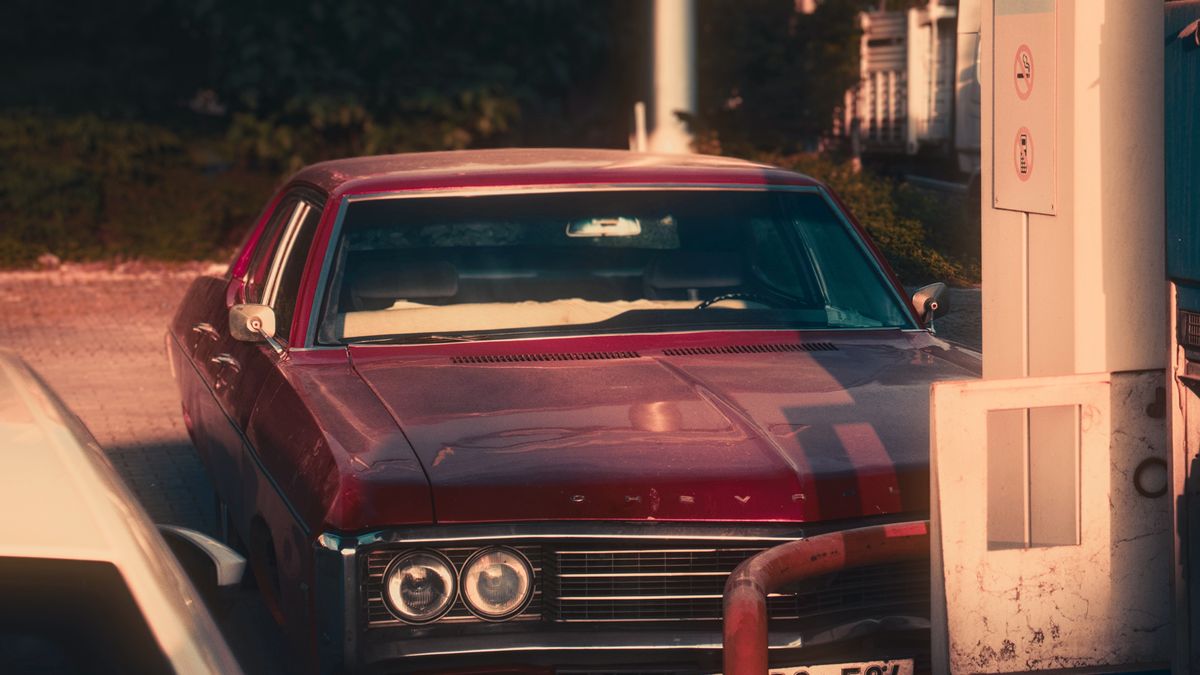
There was a distinct rhythm to pulling into an American service station on a bright June morning in 1970. The moment your car’s front tires rolled across that thick black rubber hose laid across the tarmac, a cheerful metallic *ding-ding!* chimed inside the garage bay.
Before you could even turn off the ignition, a uniformed attendant wearing a peaked cap and matching name badge jogged out with a smile. “Fill ‘er up with regular, sir?” he would ask, already reaching for the chrome gas cap while his partner unclipped a squeegee to scrub summer highway bugs from your windshield.
A cross-country family road trip was once an affordable, high-spirited adventure fueled by 35-cent gasoline, free folded paper maps, and roadside hospitality. Let us look back at how the American road trip and service station experience transformed from the golden age to the modern automated era.
The Lost Magic of the Full-Service Station
In the 1950s, 1960s, and early 1970s, pulling into a **Texaco**, **Gulf**, **Sinclair**, **Mobil**, or **Standard Oil** station was a complete pit stop experience included entirely in the price of fuel.
While the gas pump’s mechanical numbers spun with a rhythmic clicking sound, the attendant popped your hood to check the oil dipstick, wiped battery terminals, inspected the radiator coolant, and checked tire pressures with a pencil-style metal gauge. If your fan belt was loose or a headlight was dim, a certified mechanic was right inside the bay with tools in hand.
And when you paid your four-dollar bill for a full tank, the attendant handed you a free full-color fold-out road map of the state, a complimentary set of drinking glasses, or a green dinosaur toy for the kids in the backseat.
The Economics: From Gas Wars to the 1973 Oil Shock
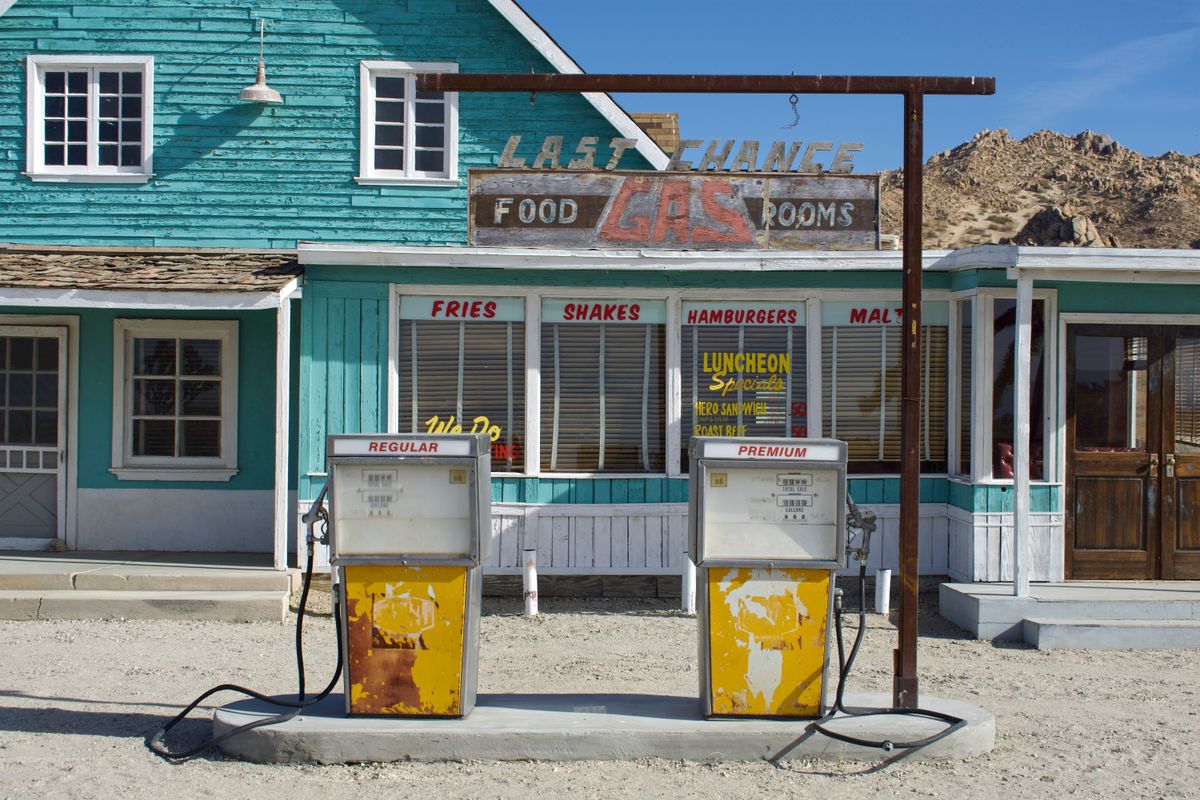
For much of the post-war era, gasoline was remarkably cheap. During local “gas wars” in the 1960s, competing stations across the street from one another slashed prices down to **25 or 28 cents per gallon** to win neighborhood loyalty.
Filling the massive 22-gallon tank of a full-size Chevrolet Impala or Ford Galaxie 500 rarely cost more than six or seven dollars. That low fuel cost made the great American family vacation an attainable reality for nearly every working household.
Everything changed abruptly in October 1973 with the OPEC oil embargo. Overnight, gas shortages created block-long lines of cars idling at sunrise. Drivers were restricted to purchasing fuel on alternating days based on whether their license plate ended in an odd or even number, and prices spiked past 55 cents per gallon, reshaping automotive design forever.
Navigation Before GPS: The Art of Unfolding the Paper Map
Long before glowing smartphone screens and voice-prompted turn-by-turn navigation, the family navigator occupied the front passenger seat with a giant **Rand McNally Road Atlas** or state highway map spread wide across their lap.
Planning the route required highlighter pens, measuring mileage scales with a finger, and looking for scenic detour loops marked with green dots. Members of the **AAA Motor Club** proudly carried custom spiral-bound “Triptiks,” with flip-page route maps highlighting upcoming construction zones and approved motor courts.
Refolding those giant multi-creased paper maps back into their original glove-box shape was a feat of geometry that tested the patience of every American father.
Roadside Accommodations: Neon “VACANCY” Signs and Magic Fingers
When the sun set after ten hours on two-lane highways, families looked for mom-and-pop motor inns with glowing neon signs proclaiming **”AIR CONDITIONED”**, **”COLOR TV”**, and **”FREE SWIMMING POOL”**.
After checking in at the front office and receiving a heavy brass key attached to a plastic diamond fob, kids immediately changed into swimsuits to splash in the illuminated kidney-shaped pool. In the room, dropping a quarter into the bedside metal box activated the legendary “Magic Fingers” vibrating mattress for fifteen minutes of gentle relaxation.
Dinner was an unhurried affair at an adjacent family restaurant or diner, followed by a glass bottle of Coca-Cola or Nehi grape soda from the humming metal vending machine by the ice dispenser.
The Rear-Facing Jump Seat and the Truck Air Horn Ritual
For children growing up in the 1960s and 1970s, the journey itself was the main event, spent in the rear-facing third-row jump seat of the family station wagon. With no seatbelt laws and no portable video screens, entertainment was entirely self-made.
Kids kept score on yellow legal pads, competing to spot license plates from all fifty states or shouting “Punch Buggy!” at the sight of a Volkswagen Beetle. The ultimate triumph was making the universal downward arm-pumping gesture out the rear window at passing 18-wheeler semi-trucks, celebrating with deafening cheers whenever the driver obliged with a thunderous *HONK-HONK!* that shook the station wagon’s rear glass.
From Community Pit Stops to Automated Convenience Superstores
Today, the roadside experience has shifted entirely to automated mega-travel plazas with sixty pumps, automated touch-screen card readers, blaring video screen advertisements at the pump, and vast convenience stores packed with packaged energy drinks and grab-and-go snacks.
Gasoline averages well over **$3.20 to $4.50 per gallon**, and drivers rarely speak a word to another human being during a fuel stop. While modern travel is faster and cars are far more fuel-efficient, something profound was lost when the friendly full-service attendant disappeared from the American roadside.
What is your most cherished memory of an old-fashioned family road trip, and which iconic highway did you love traveling the most?
⛽ Related Journey: Map out the highway adventure in historic roadside attractions along old Route 66 and rev up the engine with classic American cars that defined a generation.