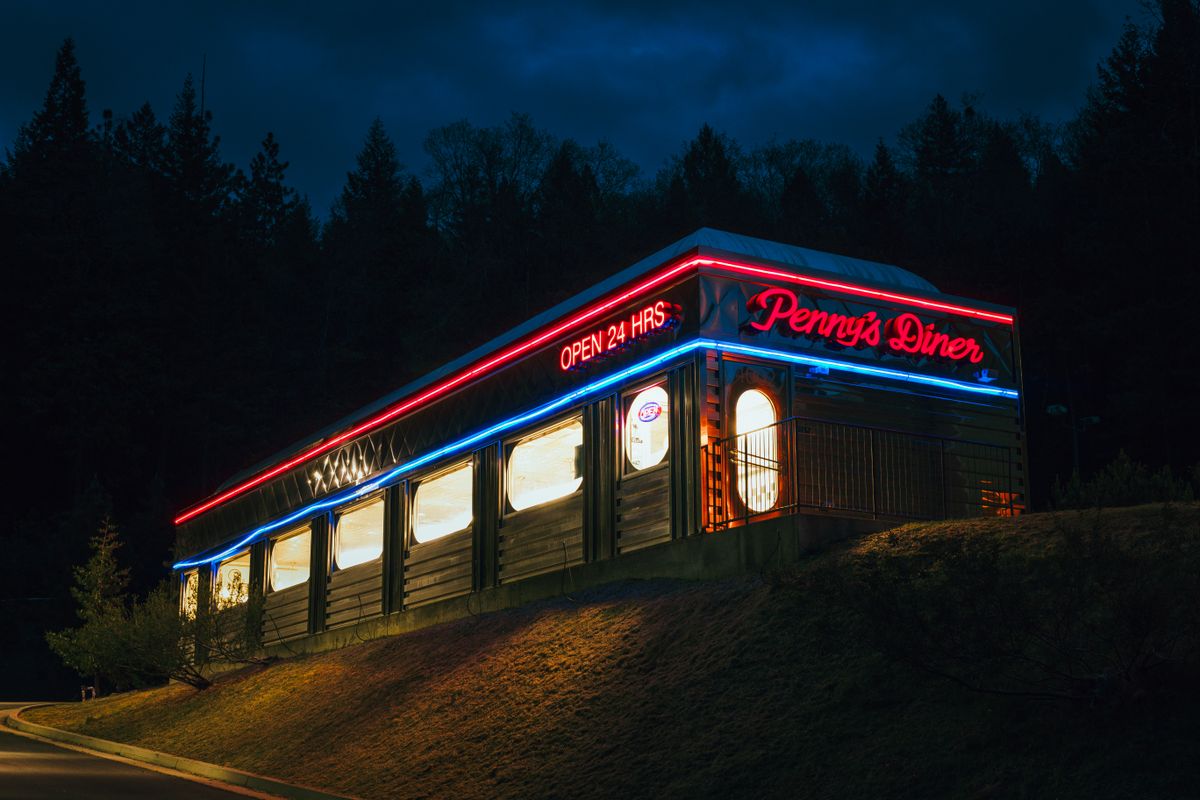
Long before glowing interstate exit signs promised identical drive-thrus every five miles, a road trip across the United States was an adventure in local hospitality. You knew you had arrived somewhere special the moment a distinctive neon beacon broke through the dark highway night, reflecting off gleaming stainless steel and polished chrome siding.
To slide into a red vinyl booth on a chilly autumn evening was to be wrapped in comfort. A waitress in a crisp apron called you “hon,” placed thick ceramic mugs of piping hot black coffee on paper placemats, and asked if you were hungry for tonight’s Blue Plate Special.
These roadside diners and regional family restaurant chains were the communal anchors of 20th-century American travel. While many of their neon lights have gone dark, the warm memories of sizzling griddles, bottomless coffee pots, and homemade fruit pies remain etched in our hearts.
Howard Johnson’s: The Orange Roofs That Guided American Travelers
For millions of families traveling during the golden age of the American highway, nothing was more reassuring than spotting a bright orange porcelain-tile roof crowned by a turquoise weather vane and Simple Simon logo. Howard Johnson’s was the undisputed king of roadside hospitality.
Founded by Howard Deering Johnson during the Great Depression, the chain expanded into a national empire along turnpikes and scenic routes. Families pulled in for iconic meals that felt like home: tender fried Ipswich clam strips served in paper-lined baskets with tartar sauce, grilled buttered frankforts in toasted New England buns, and chicken pot pies with flaky, golden crusts.
And then came the legendary dessert counter boasting exactly **28 flavors of ice cream**—from buttercrunch and peppermint stick to Burgundy cherry. Choosing your scoop was the ultimate reward after hundreds of miles in the back of the station wagon.
Horn & Hardart: The Miracle of the Automat
In bustling cities like New York and Philadelphia, **Horn & Hardart** introduced a futuristic dining marvel known as the Automat. It was part restaurant, part mechanized wonder.
Customers walked up to walls of tiny, chrome-trimmed glass cubbies, dropped shiny nickels into slots, turned a brass knob with a satisfying *click*, and lifted the little glass window to pull out a steaming plate of baked macaroni and cheese, Salisbury steak, or a slice of fresh lemon meringue pie.
Behind the glass walls, an invisible army of skilled cooks constantly restocked empty cubbies. The Automat brought bankers in suits, factory workers in overalls, and school children together at communal marble tables, offering dignity, speed, and affordable comfort food.
Steak and Ale and York Steak House: The Suburban Dinner Out
When families wanted to celebrate a birthday, anniversary, or graduation in the 1970s and 1980s, casual steakhouse chains provided an unforgettable evening of affordable luxury.
**Steak and Ale**, created by legendary restaurateur Norman Brinker in 1966, transported diners into a cozy, Tudor-style English inn complete with dim amber lighting, stained glass, and dark wood beams. It popularized the unlimited salad bar and served sizzling cuts of prime rib alongside foil-wrapped baked potatoes loaded with sour cream and chives.
Meanwhile, inside shopping malls across the Midwest and East Coast, **York Steak House** served cafeteria-style sirloins and ribeyes grilled to order over open flames, flanked by warm yeast rolls and creamy butterscotch pudding.
The Rituals of Tabletop Jukeboxes and Pie Carousels
Beyond the food, vintage diners possessed a unique sensory atmosphere that modern eateries simply cannot duplicate.
Mounted on the wall of each booth was a mini metal **Seeburg or Wurlitzer selector unit**. Flipping through the printed plastic song cards and dropping a dime into the coin slot to play Johnny Cash, Patsy Cline, or Elvis Presley while your grilled cheese sandwich sizzled on the flat top was pure Americana.
Near the cashier’s counter stood the rotating glass pie carousel. Lit from within, it slowly turned round and round, showcasing mile-high coconut cream pies, Dutch apple crumbles with caramelized cinnamon, and strawberry rhubarb slices that tempted you while you paid your two-dollar bill.
The Secret Language of Short-Order Cooks and Diner Slang
Part of the theater of visiting an authentic diner was listening to the rapid-fire slang shouted across the counter between the waitresses and short-order cooks. Behind the sizzling grill, seasoned line cooks moved with lightning speed, orchestrating dozens of orders by ear.
To an outsider, the orders sounded like a foreign code: “Adam and Eve on a raft” meant two poached eggs on toast; “draw one in the dark” signaled a black cup of drip coffee; “wreck ’em” called for scrambled eggs; and “burn the British” was an order for a toasted English muffin. This spirited banter gave every diner a lively, theatrical personality where customers felt like part of an ongoing neighborhood comedy show.
Sambo’s and Wag’s: 24-Hour Beacons for Night Owls
Before 24-hour superstores existed, late-night shift workers, college students, and travelers relied on all-night family restaurant chains. In the West and Sunbelt, **Sambo’s** operated more than 1,100 locations, famous for stacks of light-as-air buttermilk pancakes topped with boysenberry syrup and bottomless coffee pots.
In the Midwest and South, Walgreens operated **Wag’s**, charming freestanding family restaurants with mansard roofs, comfortable curved booths, and expansive dessert counters that kept highway drivers caffeinated through the wee hours of the morning.
Why the Chrome Era Quietly Faded Away
The decline of classic roadside diners followed the restructuring of America’s transportation and dining habits. The completion of the Interstate Highway System bypassed historic two-lane roads where independent diners flourished.
Simultaneously, massive standardized fast-food chains with ninety-second drive-thru windows replaced sit-down roadside meals for travelers in a hurry. Rising real estate costs and corporate consolidation swallowed up family-owned operations whose recipes and hospitality had been passed down for generations.
Yet across the country, a dedicated handful of historic diner cars still keep the griddles hot, serving up nostalgia alongside crispy hash browns and friendly conversation.
What was your favorite roadside diner or family restaurant to visit on road trips, and what meal was your absolute go-to order?
☕ Related Memory: Discover the places that kept their griddles hot in small-town diners that have survived for decades and see how road travel transformed in gas station prices and road trips: then vs now.