

Whenever you decide to purchase a new smartphone, laptop, or smart television, you face an immediate dilemma: Should you tap a few buttons on Amazon or Flipkart and have the package delivered to your doorstep in twenty-four hours? Or should you drive to your local electronics superstore—like Croma, Reliance Digital, Vijay Sales, or an authorized brand showroom—to inspect the device in person and negotiate with a sales representative?
A decade ago, the answer was obvious: online e-commerce portals offered massive venture-backed discounts that brick-and-mortar stores simply couldn’t match. But in 2026, the retail landscape has leveled out. Physical stores have fought back with aggressive price-matching guarantees, instant card cashbacks, free bundled accessories, and superior trade-in valuations. Here is an honest, real-world breakdown of where you should actually spend your money for the lowest price and the least stress.
Our Take / Quick Verdict: For small accessories, audio gear, and flash-sale smartphones under ₹20,000, online marketplaces usually win on sheer convenience and coupon stacks. But for major high-ticket purchases (laptops, OLED TVs, flagship phones over ₹60,000), visiting an offline retail store allows you to negotiate price-matching, inspect screen ergonomics in person, and avoid the dreaded nightmare of transit shipping damage.
The Pro Strategy: Showrooming & Reverse-Showrooming
Smart tech buyers don’t view online and offline retail as enemies; they play them against each other using two proven shopping strategies:
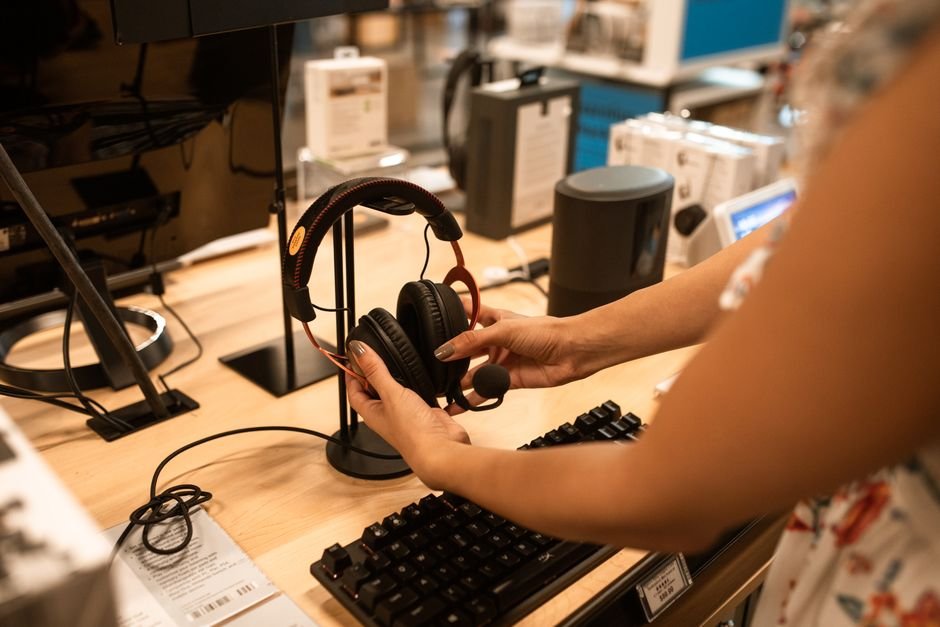
- Showrooming: You visit a physical store (like Croma or an Apple Store) to hold the phone in your hand, test its weight, evaluate the keyboard key travel on a laptop, and inspect the screen brightness under harsh ceiling lights. Once you confirm you love the hardware, you order it online during a midnight flash sale.
- Reverse-Showrooming: You research technical specifications and track historic price dips online. Then, armed with screenshots of the lowest online price and active credit card discount banners, you walk into a physical retail store and ask the store manager to match the price on the spot. In over 70% of cases, offline store managers will match the price or throw in free accessories (cases, screen protectors, bags) to close the sale.
Head-to-Head Retail Comparison Matrix
Here is how online e-commerce platforms and offline electronic stores compare across the critical stages of purchasing:
| Shopping Dimension | Online Marketplaces (Amazon / Flipkart) | Offline Retail Stores (Croma, Reliance, Local) | Winner |
|---|---|---|---|
| Initial Price & Flash Deals | Aggressive midnight flash discounts & bank coupons | Standard MSRP pricing on display shelf | Online (By 3% to 7%) |
| Negotiation Potential | Zero (Algorithmic, take-it-or-leave-it pricing) | High (Managers can bundle bags, discounts, extended warranty) | Offline (For skilled negotiators) |
| Physical Hands-On Inspection | Unboxing only after delivery payment | Test screen, speakers, keyboard, ergonomics before paying | Offline (Massive advantage) |
| Old Device Exchange / Trade-In | Strict automated delivery agent inspection (frequent rejections) | Human evaluation; flexible negotiation on trade-in value | Offline (Much smoother) |
| Return & Replacement Policy | Strict “Service Center Visit” policies on electronics | Direct store replacement within 7 to 14 days for defects | Offline |
| Instant Gratification | Wait 1 to 3 days for shipping | Walk out with your new gadget in ten minutes | Offline |
The Return Policy Shock: The Death of Easy Online Returns
Many consumers still operate under the outdated assumption that if they don’t like a smartphone or laptop bought online, they can simply initiate a return and get their money back within seven days. That policy is officially dead across major Indian e-commerce platforms.
For virtually all consumer electronics, online return policies have been replaced with a strict “Brand Service Center Visit” policy. If your brand-new ₹80,000 laptop arrives with a dead pixel or buzzing fan, Amazon and Flipkart will not pick it up for a refund. Instead, their app will instruct you to carry the laptop to an authorized manufacturer service center, wait three to five business days for a technician inspection report, and submit documentation before a replacement is approved.
At a physical retail store like Croma or Reliance Digital, if a device malfunctions within the first 7 to 14 days, you simply carry it back to the store manager where you purchased it. In most cases, they will unbox a brand new replacement unit at the customer service desk immediately.

Exchange Programs: Why Offline Wins on Trade-Ins
If you plan to trade in your old phone or laptop to discount your new purchase, doing it online is often an exercise in heartbreak. An online portal will quote you a tempting ₹14,000 exchange value. But when the delivery courier arrives at your door, they inspect the device under a flashlight, flag a microscopic hairline scratch on the aluminum bezel, and unilaterally slash the exchange valuation to ₹7,000—forcing you to either pay the difference or cancel the entire order.
At an offline store, you hand your old phone to a store associate. They run diagnostic software, assess the condition right in front of you, and agree on a firm exchange credit applied directly to your invoice. If they quote slightly lower than online, you can negotiate: “If you give me ₹12,000 for this trade-in, I’ll buy the laptop right now.”
Worried about unexpected repair bills down the road? Be sure to read our essential buyer guide on Warranty & After-Sales Service — What to Check Before Buying Any Gadget.
Frequently Asked Questions
1. Do offline stores really match online Amazon/Flipkart prices?
Yes, in most cases! Major national electronics chains have explicit “Price Match” policies. Show the live Amazon/Flipkart product page (sold directly by verified sellers, not third-party resellers). If the product is in stock online, store managers will almost always match the net price.
2. Can I get the same credit card instant discounts offline?
Yes. Physical retail chains partner with all major Indian banks (HDFC, ICICI, SBI, Axis) to run identical instant swipe cashbacks and 6 to 12-month No-Cost EMI tenures through Pine Labs payment terminals.
3. Are laptops bought online covered by the same warranty as offline?
Yes. As long as you purchase from an authorized seller (e.g., Appario Retail or official brand stores on Amazon), the warranty is identical. The manufacturer’s warranty starts from the invoice date regardless of whether you bought it online or in a shopping mall.
4. Which is better for buying large appliances (TVs, Refrigerators)?
Offline retail is overwhelmingly superior for large appliances. You can evaluate display viewing angles and panel uniformities in person, and the store coordinates scheduled delivery and professional wall-mount installation teams concurrently.
The Verdict
Shop smart by matching the channel to the purchase size. For phone cases, cables, power banks, and budget earbuds under ₹3,000, buy online—the doorstep convenience is unbeatable. But when you are dropping ₹50,000 or more on a laptop, OLED TV, or flagship smartphone, take an hour on a Saturday to visit an offline electronics showroom. Test the hardware with your own hands, negotiate price-matching with the store manager, and enjoy walking out with your shiny new gadget in hand without worrying about transit delivery stress.