
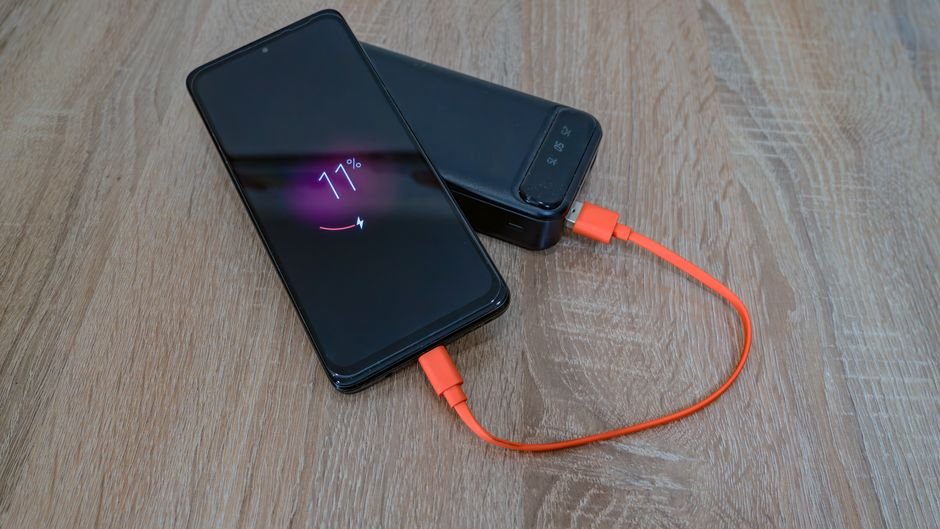
There is nothing quite as anxiety-inducing as watching your smartphone battery tick down to 4% while you are waiting for a ride in an unfamiliar neighborhood or navigating a crowded airport terminal. In our hyper-connected world, a reliable portable power bank has become just as essential as your wallet and house keys. But walk into an electronics store or browse online marketplaces, and you are immediately bombarded by confusing technical jargon: “10,000mAh vs 20,000mAh,” “65W USB-PD,” “Quick Charge 3.0,” “PPS protocol,” and “airline-approved Watt-hours.”
Many buyers simply buy the biggest number at the lowest price, only to discover their new power bank takes fourteen hours to recharge itself, cannot charge their laptop, or gets confiscated by airport security. Let’s demystify portable charging technology with real engineering science so you can pick the perfect battery pack for your travel needs.
Our Take / Quick Verdict: A 10,000mAh power bank with 20W to 30W Power Delivery (PD) is the sweet spot for everyday pocket carry and day trips, recharging a standard phone 1.5 to 2 times. If you travel frequently or need to power a laptop, buy a 20,000mAh pack with at least 65W PD output. Never buy no-name unbranded power banks from street vendors—they use recycled cells that pose genuine fire risks.
The mAh Lie: Why 10,000mAh Doesn’t Mean 10,000mAh
Here is the most common customer complaint: “My phone has a 5,000mAh battery, and I bought a 10,000mAh power bank. Why did it only charge my phone 1.4 times instead of exactly twice?”
This isn’t a scam—it is basic electrical physics. The 10,000mAh rating printed on the box refers to the capacity of the internal lithium cells at their nominal chemical voltage of 3.7 Volts (total energy: 37 Watt-hours). However, the standard USB charging protocol delivers power at 5 Volts, 9 Volts, or 12 Volts.
During voltage conversion inside the power bank’s circuit board, and due to heat loss in the charging cable, you lose approximately 25% to 30% of total energy as thermal dissipation. The actual usable output capacity (often printed in fine print as “Rated Capacity”) of a 10,000mAh power bank is roughly 6,500mAh to 7,000mAh at 5V. Always calculate with this 70% efficiency factor when estimating charges.
Capacity Comparison: Which Size Suits Your Travel?
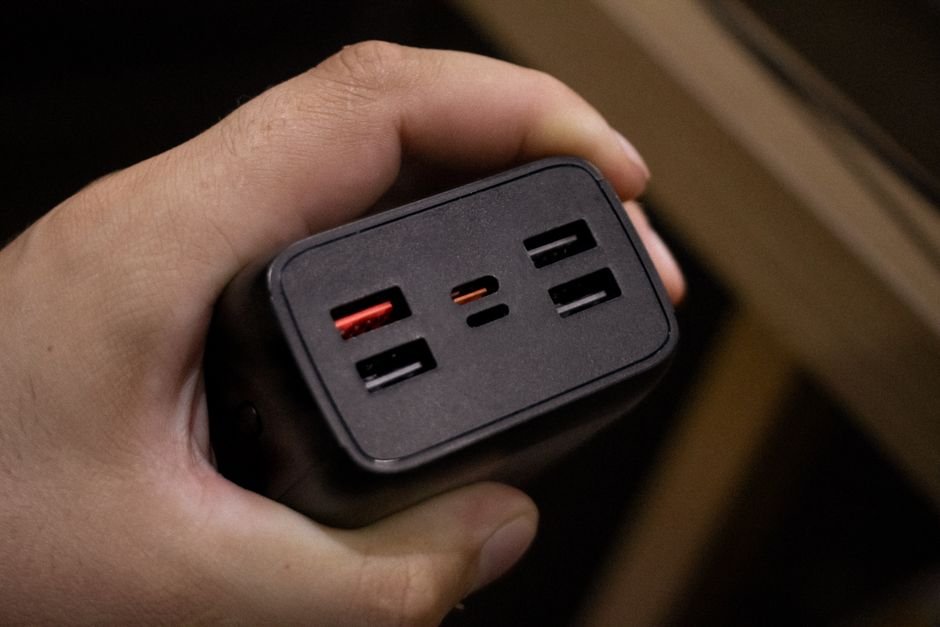
Power banks generally come in three distinct capacity tiers, each tailored for different travel scenarios:
| Capacity Tier | Approx. Weight | Real-World Smartphone Recharges | Best Travel Use Case | Average Price (India) |
|---|---|---|---|---|
| 5,000 mAh (MagSafe / Mini) | 120g – 150g | 0.8 to 1.0 full charges | Emergency pocket backup, evening outings | ₹1,299 – ₹1,999 |
| 10,000 mAh (Slim Standard) | 210g – 240g | 1.5 to 2.0 full charges | Daily commute, day trips, office backup | ₹999 – ₹1,699 |
| 20,000 mAh (Heavy Duty) | 420g – 480g | 3.5 to 4.5 full charges | Weekend treks, train journeys, laptop charging | ₹1,899 – ₹3,499 |
| 24,000 – 27,600 mAh (Workstation) | 550g – 650g | 5+ phone charges or 1 full laptop charge | Remote digital nomads, international flights | ₹4,500 – ₹8,999 |
Wattage and Protocols: What Really Matters
Capacity tells you how much energy the battery holds. Wattage (Watts = Volts x Amperes) tells you how fast that energy flows into your device. A massive 20,000mAh battery that outputs only 10W (5V/2A) will take four agonizing hours to recharge a modern phone.
- 20W – 30W USB Power Delivery (PD): Ideal for modern iPhones, Samsung Galaxy S-series, Google Pixels, and iPads. Can charge an iPhone from 0% to 50% in 30 minutes.
- 65W – 100W USB-PD: Essential if you want to charge laptops (MacBook Air/Pro, Dell XPS, ThinkPad) directly from your power bank. A power bank with less than 45W will not trigger laptop charging circuits.
- PPS (Programmable Power Supply): A sub-protocol of USB-PD that allows the phone and battery pack to dynamically negotiate micro-voltage adjustments in 20mV increments. Necessary for triggering Samsung’s “Super Fast Charging 2.0” (45W).
Airline Flight Regulations: The 100Wh Rule
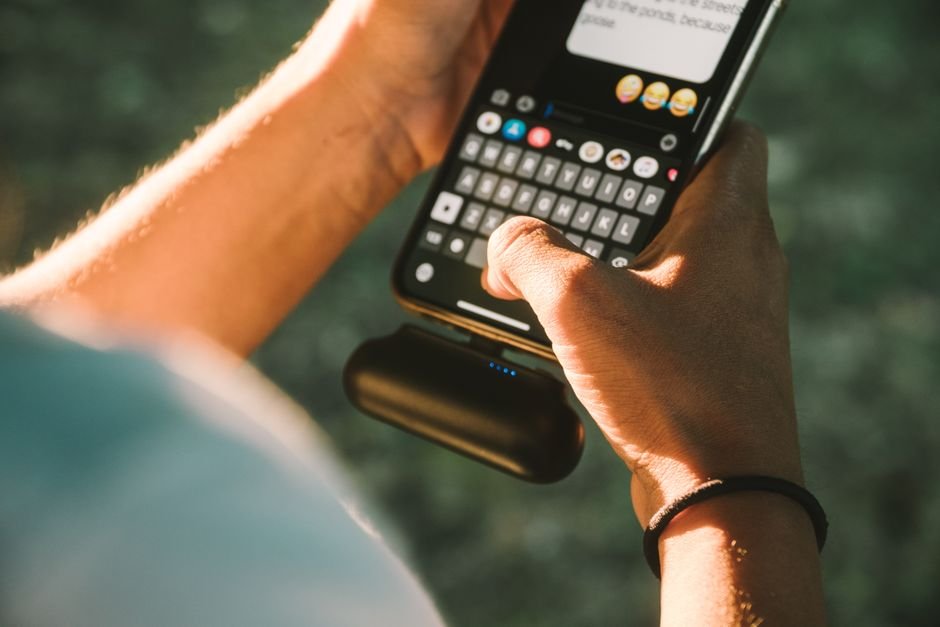
Every commercial airline in the world (governed by the International Air Transport Association – IATA and India’s DGCA) enforces strict safety limits regarding lithium batteries to prevent cargo hold fire disasters:
- Never Put Power Banks in Checked Luggage: Power banks are strictly prohibited in checked-in suitcases. They must always travel in your cabin hand baggage where any thermal event can be detected and extinguished immediately.
- The 100 Watt-Hour (Wh) Limit: Passengers can carry power banks up to 100Wh without airline pre-approval. To find Watt-hours, use the formula: (mAh × 3.7V) ÷ 1000. A 20,000mAh pack equals 74Wh (completely legal). A 27,000mAh pack equals 99.9Wh (the maximum legal limit). Any battery exceeding 27,027mAh will be confiscated by airport security.
Looking for affordable gear to capture smooth videos and crisp audio during your travels? Browse our tested recommendations in Best Budget Gadgets for Content Creators.
Frequently Asked Questions
1. Can a 65W power bank damage a pair of tiny wireless earbuds?
No. Modern power banks and USB-PD circuits only deliver the wattage requested by the connected device. Your earbuds will draw only 2.5W to 5W safely. Many quality packs also feature a dedicated “Low-Current Trickle Mode” activated by double-pressing the power button.
2. Why does my power bank get warm during charging?
Voltage conversion and chemical resistance naturally produce heat during high-speed charging. Mild warmth is normal. However, if the casing becomes uncomfortably hot to hold or begins to emit a plastic burning smell, unplug it immediately—it indicates internal short-circuiting.
3. How long should a good power bank last?
Quality lithium-polymer battery packs from reputable brands (Anker, Mi, Ambrane, Stuffcool) retain roughly 80% capacity after 300 to 500 charge cycles, providing between two to four years of dependable service.
4. Can I use my power bank while it is being charged (Pass-Through Charging)?
Only if the power bank explicitly supports “Pass-Through Charging.” Even then, it generates extra heat and accelerates cell degradation. It is always safer to charge the power bank fully first, then use it to charge your devices.
The Takeaway
Don’t be fooled by cheap ₹500 power banks promising unrealistic 30,000mAh capacities at street stalls—they are fire hazards packed with sand and recycled cells. For 90% of people, a certified 10,000mAh power bank with 22.5W to 30W USB-PD from brands like Xiaomi, Ambrane, or Anker is the ultimate daily carry companion. It slides effortlessly into a jeans pocket, keeps your phone alive through long travel days, and passes through airport security without a glance.