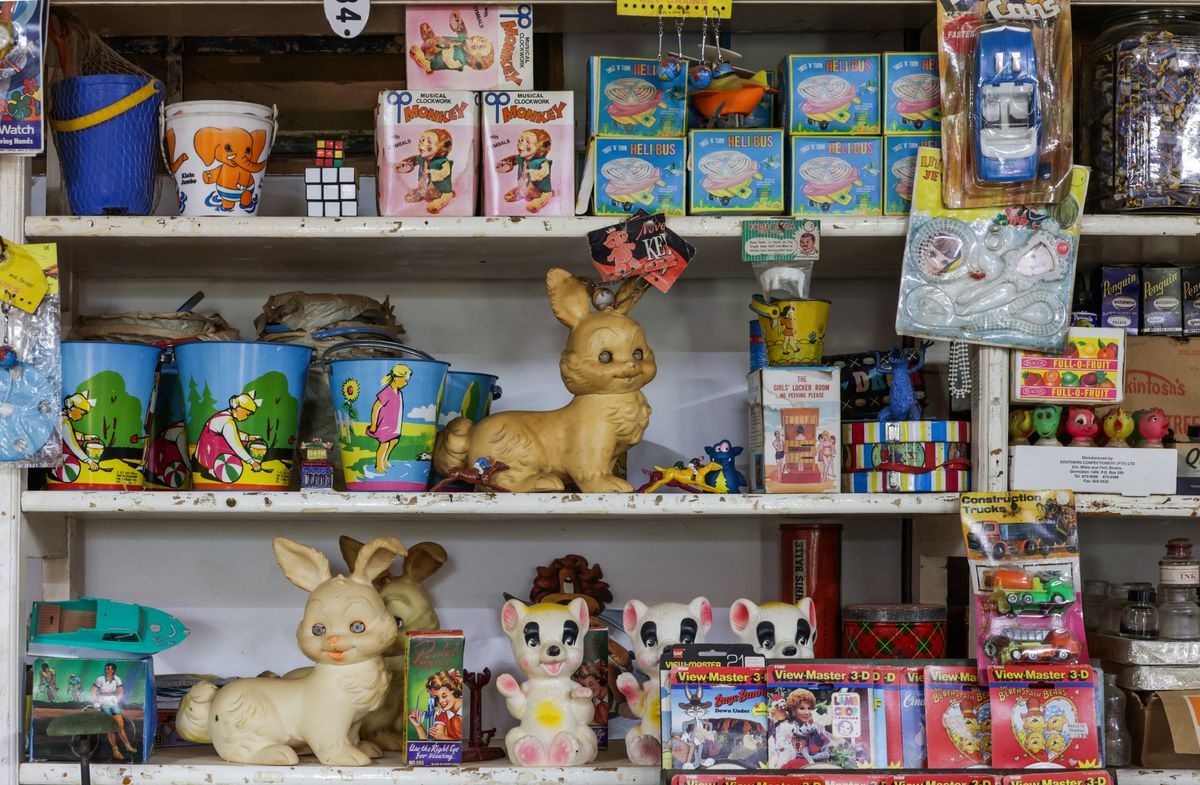
Long before glowing digital touchscreens captivated young minds, childhood was a noisy, physical, scrape-your-knees adventure powered by pure imagination. You didn’t download an application to play; you sprinted into the backyard, dumped a metal chest of toys onto the carpet, or grabbed your bicycle the moment Saturday morning cartoons ended.
Toys in the 1960s, 1970s, and 1980s were tactile marvels made of heavy pressed steel, vibrant molded plastic, and light bulbs that got genuinely hot. They made clicking sounds, flashed primary colored lights, and survived being dropped down concrete basement stairs.
Let us open the toy box of memory and celebrate the legendary playthings that fueled American childhoods before the smartphone era took over.
The Marx Big Wheel: King of the Suburban Sidewalk
In 1969, the Louis Marx and Company introduced the **Big Wheel**, and neighborhood cul-de-sacs were never quiet again. Molded in high-visibility yellow, blue, and red plastic with a gigantic 16-inch front wheel, it sat low to the pavement, making kids feel like grand prix drivers.
The real thrill was the handbrake lever mounted on the right side. Flying down a steep neighborhood driveway and yanking that lever executed a glorious, tire-screeching 180-degree “spin-out” that left flat spots on the plastic wheels and sent kids grinning from ear to ear.
Whole packs of neighborhood kids raced Big Wheels until the plastic wore thin, accompanied by the unmistakable roaring clatter of hollow plastic wheels grinding over asphalt.

View-Master: 3D Adventures in the Palm of Your Hand
Holding that distinctive red plastic **Sawyer’s View-Master** up to your eyes was like stepping into another dimension. You aimed the lenses toward a sunny living room window or bedroom lamp, pressed down on the orange plastic side lever with a satisfying *CLACK*, and watched the circular cardboard reel advance to the next 3D Kodachrome image.
Kids explored prehistoric dinosaurs, toured the Grand Canyon and Yellowstone National Park, or followed the adventures of cartoon characters in vivid, three-dimensional depth. Collecting reels stored in little paper envelopes was the original virtual reality experience.
Lite-Brite: “Making Things with Light”
Introduced by Hasbro in 1967, **Lite-Brite** turned every child into a glowing mosaic artist. The toy consisted of a light box containing a standard incandescent bulb, fronted by a black plastic pegboard grid.
You placed a black paper template over the grid and carefully pushed translucent, colored plastic pegs—ruby red, emerald green, canary yellow, and sapphire blue—through the paper. When you flipped the power switch in a dark room, the pegs lit up like miniature neon signs, creating glowing clowns, sailboats, and rocket ships that illuminated bedside nightstands for hours.
The Easy-Bake Oven: The 100-Watt Culinary Wonder
Introduced by Kenner in 1963, the **Easy-Bake Oven** gave millions of children their very first taste of independence in the kitchen. Shaped like a miniature retro turquoise stove, it baked real edible cakes using nothing more than the focused heat of an ordinary **100-watt incandescent light bulb** inside.
Kids mixed powdered batter with tablespoons of water in miniature aluminum pans, pushed them through the slot with a plastic slide tool, and waited in breathless anticipation while the aroma of chocolate cake filled the bedroom. Frosting the warm, two-inch cake and serving slices to proud parents was a milestone of culinary pride.
Tonka Trucks and the Indestructible Steel Fleet
Long before toys were made of fragile plastic, **Tonka pressed-steel trucks** were virtually indestructible. Painted in signature bright yellow with rugged rubber tires, the Mighty Dump Truck, Bulldozer, and Crane were built to withstand real outdoor construction work.
Kids hauled heavy rocks, damp garden mud, and gravel across backyard dirt trenches. You could leave a Tonka truck buried in the sandbox through a harsh winter snowstorm, dig it out in the spring, and it was ready to haul another load without a single broken part.
The 1980s Electronics Boom: Simon and Speak & Spell
The late 1970s and early 1980s ushered in the first wave of battery-powered electronic toys. In 1978, Milton Bradley released **Simon**, a sleek, flying-saucer-shaped game featuring four large colored quadrants that flashed and emitted distinct musical tones.
Passing Simon around the living room while trying to memorize ever-longer sequences of flashing colors tested the nerves of kids and adults alike. Nearby, Texas Instruments’ **Speak & Spell** synthesized a robotic voice that challenged children to type words on a membrane keyboard, celebrating victories with its cheerful chime.
The Slinky on the Stairs and Spirograph Geometric Wonders
Few mechanical toys were simpler or more mesmerizing than the original coiled steel **Slinky**, invented by naval engineer Richard James. Nothing matched the suspense of placing the steel coil at the top of a flight of carpeted stairs, nudging the top ring forward, and watching it step end-over-end down the staircase with a rhythmic, metallic *slink-slink-slink* song.
Meanwhile, rainy indoor afternoons were transformed by Kenner’s **Spirograph**. Armed with clear plastic geared wheels, colored ballpoint pens, and a pin board, children created intricate, hypnotic geometric spiral patterns that looked like professional stained-glass artwork.
The Greatest Toy Was the Neighborhood Itself
As beloved as these physical toys were, the true magic of that era was the freedom that surrounded them. Childhood had a natural, outdoor rhythm dictated not by battery percentages, but by the neighborhood streetlights turning on at dusk.
Children negotiated playground rules, invented imaginary games in backyard tree forts, and formed lifelong friendships face to face on front porches.
Which childhood toy did you love the most, and which one do you wish you still had sitting on your shelf today?
🚲 Related Childhood Memory: Step back into outdoor neighborhood life in vanishing traditions of small-town America and remember Thursday evening TV in TV shows every American family gathered around in the 1980s.