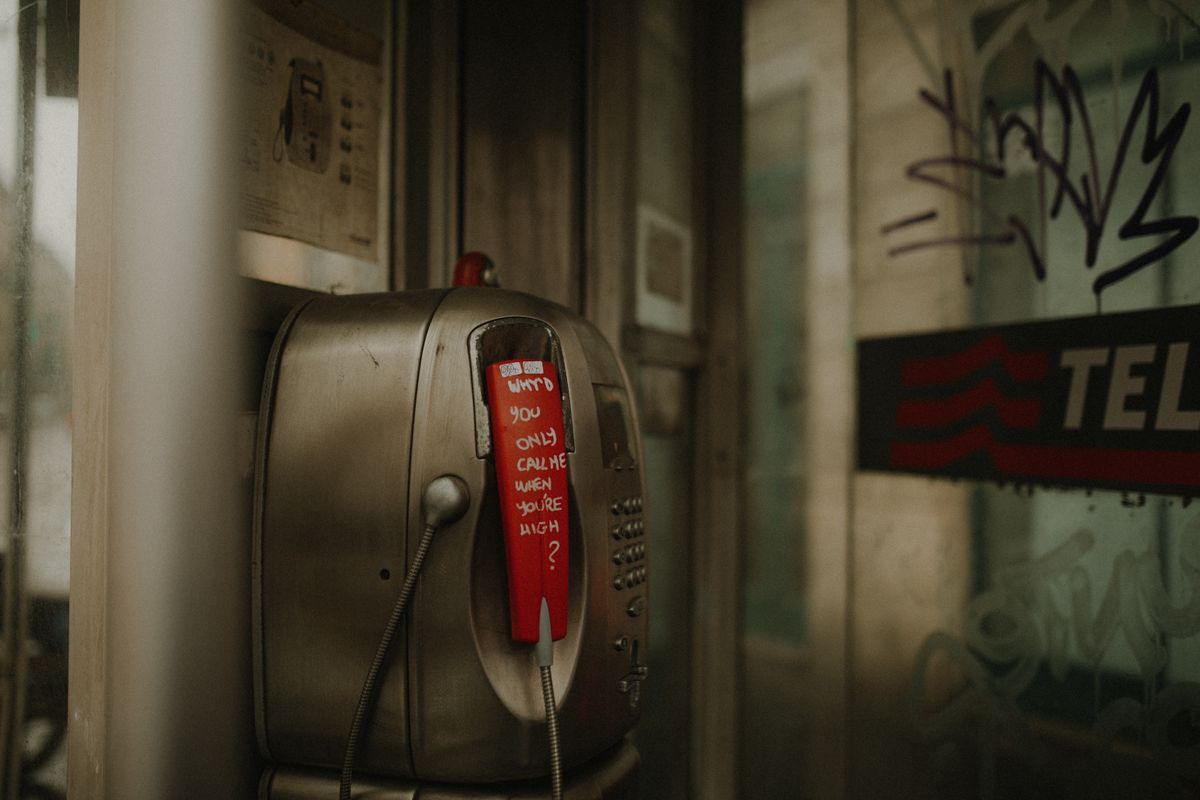
There was a specific physical ritual that every American understood implicitly whenever they needed to connect with the outside world while away from home in 1979. You fished into your pocket for a shiny silver dime, stepped inside a heavy glass and aluminum booth on the street corner, and pulled the folding door firmly shut until the interior ceiling light switched on and a tiny electric fan hummed to life.
Long before smartphones placed the entire internet in our pockets and reduced human voices to instant text bubbles, communication was a deliberate, audible, and mechanical affair. Over two million public payphones once stood sentinel across the United States—outside gas stations, inside diner vestibules, along airport concourses, and on downtown street corners.
They were lifelines in emergencies, private sanctuaries for whispered teenage romances, and the essential communication network of an entire nation. Let us drop a dime into the slot and remember how we used to stay in touch.
The Western Electric Payphone: Built Like an Iron Safe
Manufactured by Western Electric for the Bell System, the classic American public payphone was a masterpiece of heavy-duty engineering. Encased in thick, bulletproof black or chrome steel, it weighed nearly thirty pounds and was designed to withstand decades of weather and vandalism.
Lifting the heavy, armored handset produced a crisp, steady dial tone that signaled you were connected to the vast nationwide network. Dropping coins into the top slot triggered distinct metallic chimes—a high-pitched bell for nickels, two chimes for dimes, and a deep, resonant gong for quarters—allowing remote human operators to verify payment by ear.
And if your call went unanswered or you hung up before connecting, the heavy steel flap of the coin return chute clicked open with a satisfying clatter, returning your change.
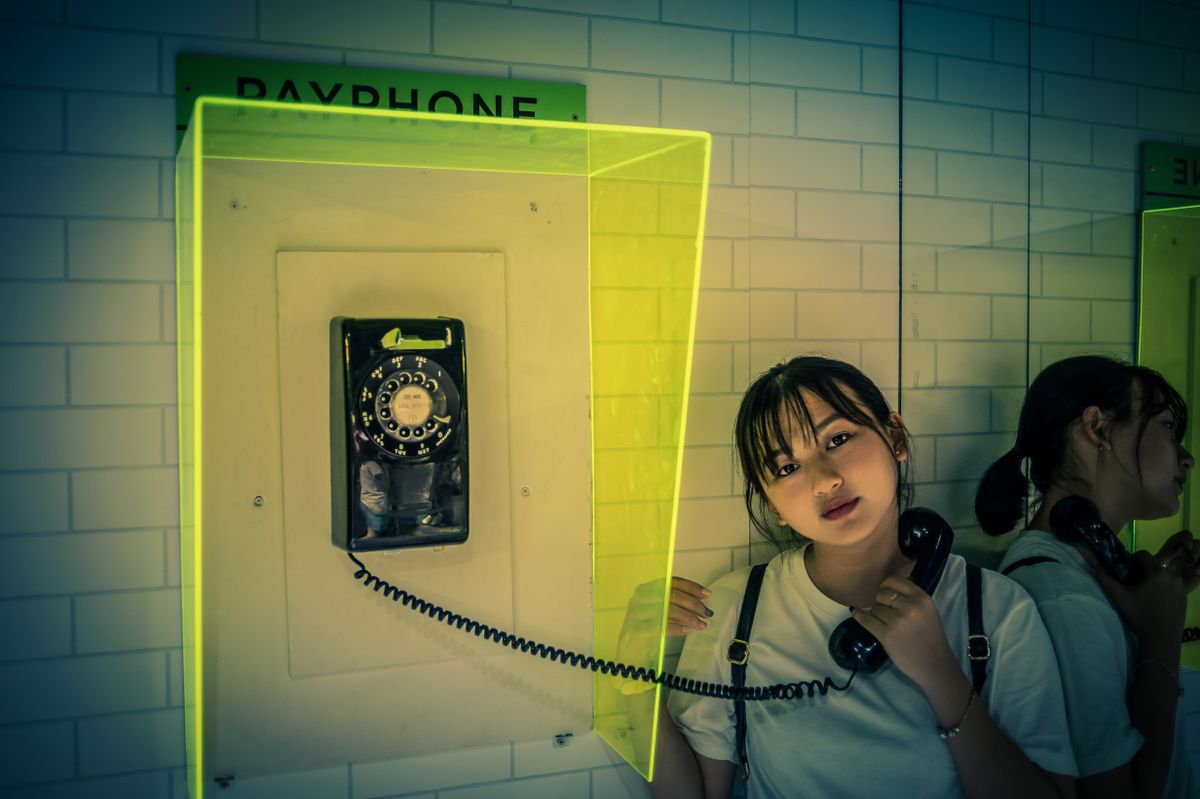
The Art of the Collect Call: “Mom, Come Pick Me Up!”
For teenagers stranded at the roller rink, mall, or high school football game without spare change, the **collect call** was an essential art form. Dialing “0” connected you to a live operator, or later an automated robotic recording, prompting you to state your name for billing.
Generations of clever American youth mastered the five-second speed-talking hack: when prompted for your name, you hurriedly blurted: *”MomComePickMeUpAtTheMall!”*
Back home, parents listened to the collect call announcement, recognized the urgent message, promptly declined the charges, and grabbed their car keys to head out to the pickup lane with a chuckle.
The Giant Paper Phone Book and the Cable
Suspended beneath the payphone on a heavy, flexible steel cable was the community’s paper bible: the **Yellow Pages and White Pages directory**. Bound in thick paper covers with hundreds of razor-thin pages, it contained the phone number and street address of literally every single resident and business in town.
You flipped through the alphabetical listings with your thumb, running your finger down columns of names while shielding the receiver from street traffic noise. Often, the exact page you desperately needed was dog-eared, covered in ballpoint pen doodles, or torn out by a previous caller.
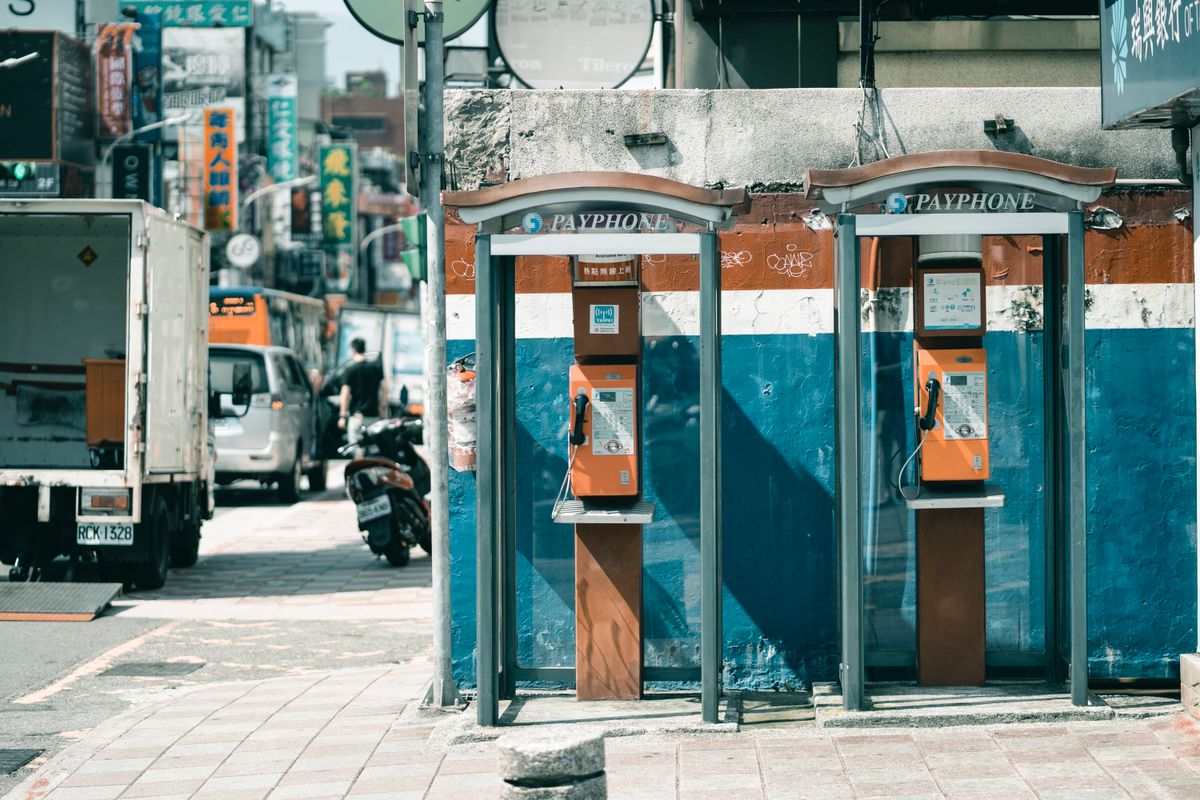
The Miracle of “Operator 411” and Dialing “0”
If you didn’t know a number, human assistance was just three digits away. Dialing **411** connected you instantly to a live directory assistance operator in your regional exchange. You stated the city and name, and the operator provided the seven-digit number with polite, cheerful efficiency.
Dialing **”0″** connected you to a Bell telephone operator who could place person-to-person long-distance calls, connect international cables, trace urgent emergency calls, or break into a busy line if there was an urgent family emergency.
Memorizing Numbers: The Brain’s Living Address Book
Because nobody carried digital contact lists, Americans in past decades maintained an incredible internal database of memorized telephone numbers. You knew by heart the phone numbers of your parents, grandparents, aunts and uncles, doctor, school, and at least ten best friends.
Older generations even recalled letters in exchange names: dialing **BUtterfield 8**, **KLondike 5**, or **MUrray Hill** before numbers became standardized into seven digits.
Parents routinely gave children an emergency dime tucked into the sole of their sneaker or sewn into the lining of a winter coat, ensuring they could always find a booth and call home if they got lost.
The Sunday Night Long-Distance Rate and Party Lines
Placing a long-distance call to relatives in another state was an expensive luxury that required strategic timing. During weekday business hours, rates could exceed a dollar a minute. Families waited eagerly until **after 11:00 PM** or **Sunday evenings**, when AT&T dropped rates to deep discount brackets.
Families gathered around the living room phone with an egg timer on the table, passing the receiver around to speak to grandparents for exactly three minutes before the rate clicked to the next charging bracket.
In rural areas, households shared **party lines**—a single telephone circuit shared by four or five neighboring families. Each house had a distinct ring pattern (like two short rings and one long ring). If you picked up the receiver and heard your neighbor Mrs. Higgins discussing her tomato garden, you politely apologized and hung up—though everyone knew local gossips quietly listened in on neighborhood conversations!
Why the Phone Booth Disappeared
With the meteoric rise of mobile cellular phones in the late 1990s and 2000s, payphone usage plummeted. Maintaining physical coin-operated terminals across millions of street corners became unprofitable for telecommunications companies, and booths were gradually dismantled or converted into digital Wi-Fi kiosks.
Yet for anyone who remembers sliding that glass folding door shut to have a private conversation in the rain or checking the coin return slot for forgotten change, the humble payphone remains an enduring symbol of American connection.
Do you still remember your childhood home telephone number by heart, and when was the last time you used a public payphone?
☎️ Related Reflection: Remember the purchasing power of your pocket change in what a dollar bought in America in 1975 vs today and explore vanishing traditions of small-town America.