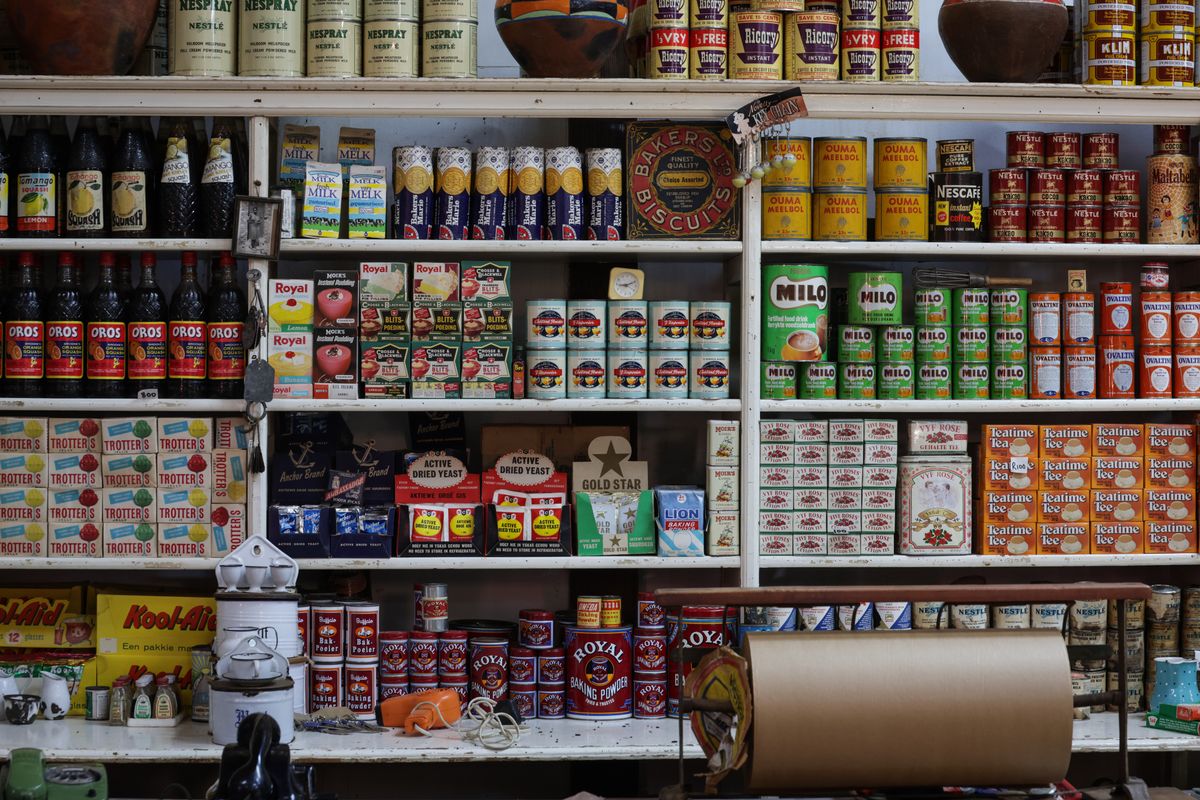
If you close your eyes, you can probably still hear the rhythmic clatter of the mechanical cash register, the hum of the open dairy coolers, and the rustle of sturdy brown paper grocery sacks. There was a time when a weekly trip to the local supermarket was the centerpiece of American suburban family life.
Back in the 1960s and 1970s, grocery shopping wasn’t a chore you rushed through with a self-checkout scanner. It was a sensory ritual. The smell of freshly ground Eight O’Clock coffee beans near the entrance welcomed you, and your neighborhood butcher actually knew how thick your family liked their Sunday pot roast sliced.
Across the United States, dozens of regional supermarket dynasties that once fed entire generations have quietly vanished into the history books. Let us take a stroll down the linoleum aisles of memory and remember the beloved grocery chains that once defined American towns.
The Reign of The Great Atlantic & Pacific Tea Company (A&P)
For nearly a century, A&P was not just a grocery store—it was an American institution. At its peak in the 1930s through the 1960s, A&P operated over 15,000 stores nationwide, making it one of the largest retailers on the planet.
Who could forget the signature red brick storefronts, the distinctive cupolas on the roof, and the red-and-white shield logo? Stepping inside an A&P meant picking up trusted private labels like Jane Parker pies and baked goods, Ann Page preserves and salad dressing, and Bokar or Eight O’Clock whole bean coffee that you ground yourself right in the aisle.
A&P pioneered the modern concept of the self-service supermarket. Yet as mega-supercenters expanded in the 1990s, this giant struggled to adapt, finally closing its remaining storefronts in 2015 after 156 remarkable years in business.
Grand Union: The Pioneer of the American Supermarket Experience
Throughout the Northeast and Mid-Atlantic, Grand Union was the cornerstone of community shopping centers. Founded all the way back in 1872 in Scranton, Pennsylvania, Grand Union was among the earliest chains to introduce the complete “one-stop shop” experience to everyday Americans.
In the 1950s and 1960s, a trip to Grand Union meant automated sliding doors that felt like science fiction, brightly lit wide aisles, and a bustling bakery counter. Kids begged their parents to push the wire shopping carts just to grab a free sugar cookie from the bakery lady.
Grand Union was also famous for its loyalty stamp redemption centers, where collecting little paper stamps over months could earn your family a shiny new toaster or a set of porcelain dinner plates.
Alpha Beta: The Pride of the West Coast and “Tell a Friend”
If you grew up in California, Arizona, or Nevada between the 1940s and 1990s, Alpha Beta was almost certainly your family’s grocery home. The chain earned its unique name because it organized items in alphabetical order to help customers find their goods faster.
Shoppers fondly recall the cheerful cowboy-themed commercials featuring the “Alpha Beta Tell-a-Friend” jingle that stuck in your head for days. Inside, the store boasted expansive produce sections overflowing with California citrus, crisp iceberg lettuce, and sun-ripened tomatoes priced at three pounds for a dollar.
Through corporate buyouts and mergers in the 1990s, the cheerful Alpha Beta name was gradually replaced, but anyone who rode in the back of a wood-paneled station wagon to their local California store still remembers that friendly red sign.
Red Owl: The Friendly Face of the Midwest
Across Minnesota, Wisconsin, the Dakotas, and Iowa, nothing said hometown grocery like the bright, wide-eyed mascot of Red Owl. The cheerful red bird on the outdoor marquee was a beacon in cold Midwestern winters.
Red Owl stores were famous for community connection. They stocked local regional delicacies, hearty roasts, and sponsored youth sports leagues across small towns. Children were captivated by the Red Owl promotional coin banks and comic books handed out at the checkout lanes.
By the late 1980s, consolidation swept through the grocery industry, and the beloved Red Owl logo slowly faded from Midwestern skylines, leaving behind memories of friendly baggers who always carried your groceries out to your trunk in the snow.
Finast, Pantry Pride, and Hills: Regional Favorites We Deeply Miss
Every corner of America had its own local champion. In New England and upstate New York, shoppers relied on **Finast** (First National Stores) for fresh pantry staples and Sunday roasts.
In Pennsylvania, Ohio, and West Virginia, **Hills Department Stores and Supermarkets** brought affordable staples alongside their legendary snack bar, where the smell of freshly popped popcorn and soft pretzels wafted through the checkout line.
Meanwhile, along the Eastern seaboard, **Pantry Pride** became a household name in the 1960s by offering deep discount pricing that helped working-class families stretch their weekly food budget during tough economic times.
Trading Stamps, Paper Bags, and the Lost Art of Neighborly Service
What truly separated these vanished grocery stores from modern retail wasn’t just the brand names on the building—it was the entire culture of hospitality. Cashiers were longtime neighbors whose children went to school with yours.
At the checkout, you received green or gold trading stamps measured out in sheets based on your total receipt. Licking those stamps and pasting them into booklets around the kitchen table was a shared family pastime on rainy afternoons.
Groceries were packed carefully in heavy brown paper sacks without handles, balanced upright with milk jugs on the bottom and bread gently placed on top so nothing got squished on the drive home.
Which vanished grocery store was the one your family relied on every Saturday morning, and what is the one special item you still wish you could buy from their shelves today?
📜 Related Memory: Explore our look back at what groceries cost decade by decade from 25-cent bread to today, and discover the story behind America’s oldest surviving general stores.