Table of Contents
The real estate industry has undergone a significant transformation over the past decade, driven by advancements in technology, evolving consumer expectations, and the growing demand for transparency and efficiency. Traditional brokerage models, once heavily reliant on manual processes and in-person interactions, are now being replaced by more agile, data-driven, and customer-centric approaches. This evolution has given rise to what is now known as the next-generation real estate brokerage.
This modern brokerage model is not just an upgrade-it represents a fundamental shift in how real estate businesses operate, engage with clients, and deliver value. By leveraging cutting-edge tools, innovative business models, and enhanced digital experiences, next-generation brokerages are redefining the buying, selling, and investing process.
Understanding the Concept of Next Generation Real Estate Brokerage
At its core, a next-generation real estate brokerage integrates technology, automation, and advanced analytics into every stage of the real estate lifecycle. Unlike traditional brokerages that primarily act as intermediaries, modern brokerages position themselves as full-service solution providers.
These brokerages focus on delivering seamless, end-to-end experiences for clients. From property discovery and virtual tours to digital documentation and AI-driven insights, every touchpoint is optimized for speed, convenience, and accuracy. The goal is to eliminate friction and empower both buyers and sellers with real-time information and smarter decision-making tools.
The Role of Technology in Modern Brokerage Models
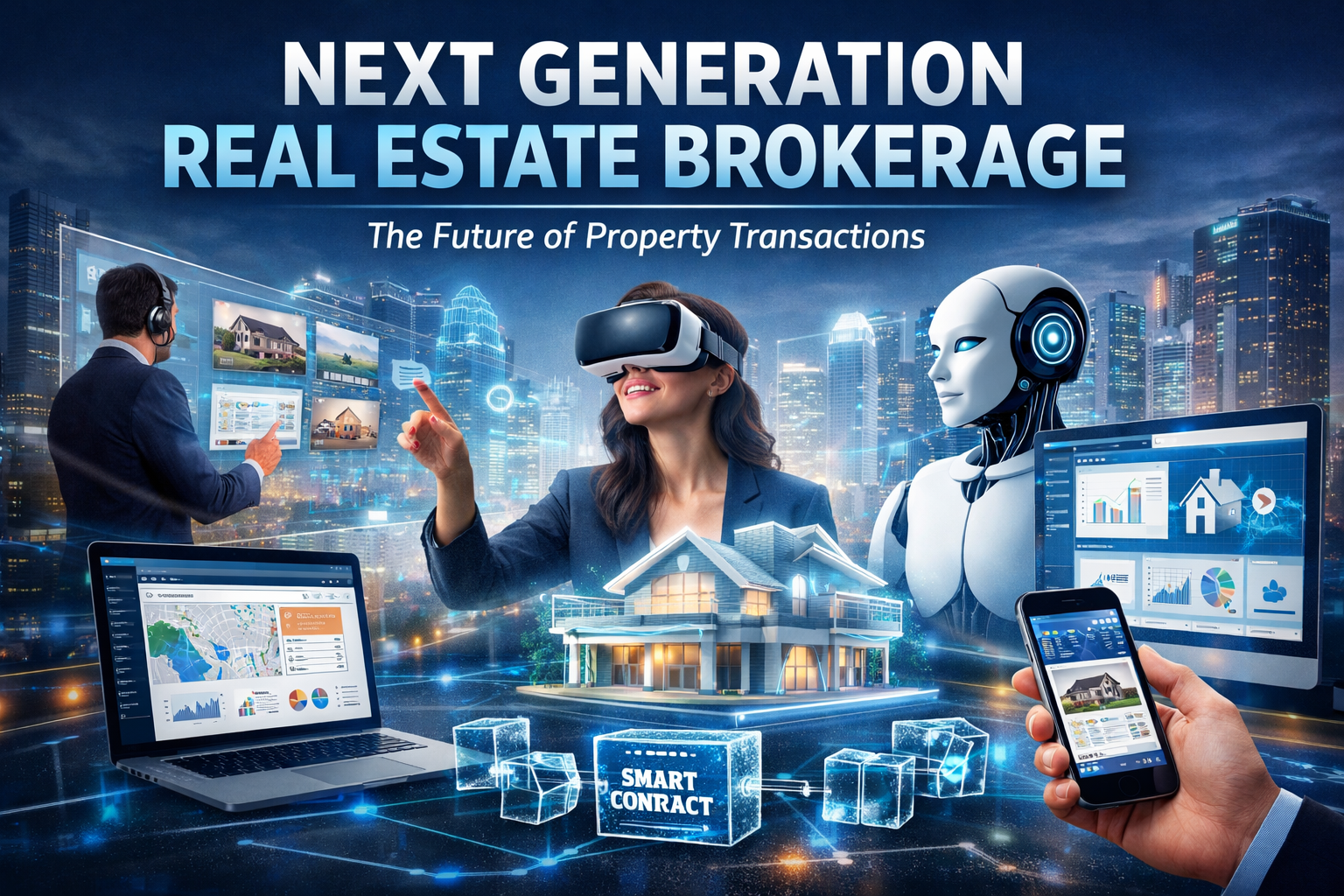
Technology is the backbone of next-generation real estate brokerage. The integration of digital tools has revolutionized how properties are marketed, how agents operate, and how clients interact with listings.
Artificial intelligence plays a crucial role in analyzing market trends, predicting property values, and recommending personalized property options based on user behavior. Machine learning algorithms continuously improve these recommendations, ensuring higher accuracy over time.
Virtual reality and augmented reality have transformed property viewing experiences. Buyers can now explore properties remotely through immersive virtual tours, reducing the need for physical visits and accelerating decision-making. This is especially beneficial for international buyers and investors.
Cloud-based CRM systems enable brokerages to manage leads, automate follow-ups, and maintain detailed client profiles. These systems ensure that no opportunity is missed and that communication remains consistent and personalized.
Blockchain technology is also beginning to influence the industry by enabling secure and transparent property transactions. Smart contracts can automate agreements, reducing paperwork and minimizing the risk of fraud.
A Shift Toward Customer-Centric Experiences
One of the defining characteristics of next-generation real estate brokerage is its strong emphasis on customer experience. Modern buyers and sellers expect convenience, speed, and transparency, similar to what they experience in e-commerce and other digital platforms.
Next-generation brokerages prioritize user-friendly websites and mobile applications that provide intuitive navigation, advanced search filters, and real-time updates. Clients can easily access property details, compare options, and track transaction progress from anywhere.
Personalization is another key factor. By leveraging data analytics, brokerages can tailor property recommendations, marketing strategies, and communication styles to individual client preferences. This level of customization enhances engagement and builds trust.
Additionally, digital communication channels such as chatbots, video consultations, and instant messaging have replaced traditional communication methods. Clients no longer have to wait for responses—they receive immediate assistance and support.
The Evolution of Real Estate Agents
The role of real estate agents has also evolved significantly in this new landscape. Agents are no longer just intermediaries; they are now consultants, advisors, and technology users.
Next-generation brokerages equip agents with advanced tools that enhance productivity and efficiency. Automated lead generation, data-driven insights, and digital marketing platforms allow agents to focus more on building relationships and closing deals rather than handling repetitive tasks.
Continuous training and upskilling are essential in this environment. Agents need to understand digital tools, data interpretation, and customer experience strategies to stay competitive. Brokerages that invest in agent development tend to achieve better performance and higher client satisfaction.
Moreover, remote work capabilities have enabled agents to operate more flexibly. They can manage transactions, communicate with clients, and conduct virtual tours without being tied to a physical office.
Innovative Business Models Driving Growth
Next-generation real estate brokerages are also redefining traditional revenue models. Many are adopting hybrid or commission-free structures, offering more transparency and cost-effectiveness for clients.
Some brokerages operate on a flat-fee basis, while others use subscription models for agents. These approaches reduce overhead costs and create more predictable revenue streams.
Additionally, iBuyer models have gained popularity, where companies use data analytics to make instant offers on properties. This provides sellers with quick liquidity and eliminates the uncertainty of traditional sales processes.
Partnerships with fintech companies have further expanded service offerings. Clients can now access mortgage solutions, property valuation tools, and investment insights within a single platform, creating a comprehensive ecosystem.
Data-Driven Decision Making
Data is one of the most valuable assets in the next-generation real estate brokerage. By analyzing large volumes of data, brokerages can gain insights into market trends, buyer behavior, and property performance.
Predictive analytics helps identify emerging markets, estimate future property values, and assess investment risks. This enables both clients and agents to make informed decisions.
Real-time data dashboards provide visibility into key metrics such as property views, engagement rates, and conversion rates. This transparency allows brokerages to continuously optimize their strategies.
Data-driven marketing is another major advantage. Targeted campaigns, personalized email marketing, and retargeting ads ensure higher engagement and better ROI.
Benefits for Buyers and Sellers
The impact of next-generation real estate brokerage is clearly visible in the enhanced experience it offers to buyers and sellers.
For buyers, the process becomes faster, more transparent, and highly personalized. They can explore multiple properties online, compare prices, and make informed decisions without unnecessary delays.
For sellers, digital marketing tools ensure maximum property visibility. High-quality visuals, targeted advertising, and data insights help attract the right audience and achieve better pricing.
The reduction in paperwork and the use of digital contracts also streamline transactions, making the entire process more efficient.
Challenges and Considerations
Despite its many advantages, the next-generation real estate brokerage model is not without challenges. The adoption of new technologies requires significant investment and ongoing maintenance.
Data privacy and security are critical concerns. Brokerages must ensure that client information is protected and that all transactions comply with regulatory standards.
There is also a learning curve for both agents and clients. While younger audiences may adapt quickly, some users may find it challenging to navigate digital platforms.
Competition is another factor. As more companies adopt advanced technologies, differentiation becomes increasingly important. Brokerages must continuously innovate to stay ahead.
The Future of Real Estate Brokerage
The future of real estate brokerage lies in continuous innovation and integration. Technologies such as artificial intelligence, blockchain, and the Internet of Things will further enhance efficiency and transparency.
Smart homes and connected devices will provide additional data points for property evaluation. AI-powered assistants will handle routine tasks, allowing agents to focus on strategic activities.
Sustainability and green building practices are also expected to play a significant role. Brokerages that incorporate eco-friendly solutions into their offerings will gain a competitive edge.
Moreover, globalization will expand opportunities for cross-border transactions. Digital platforms will make it easier for international buyers to invest in properties across different markets.
Conclusion
The emergence of the next-generation real estate brokerage marks a pivotal moment in the industry’s evolution. By embracing technology, prioritizing customer experience, and adopting innovative business models, these brokerages are setting new standards for efficiency, transparency, and value.
As the industry continues to evolve, businesses that adapt to these changes will thrive, while those that resist may struggle to remain relevant. For buyers, sellers, and agents alike, the next generation of real estate brokerage offers a more streamlined, intelligent, and rewarding experience.