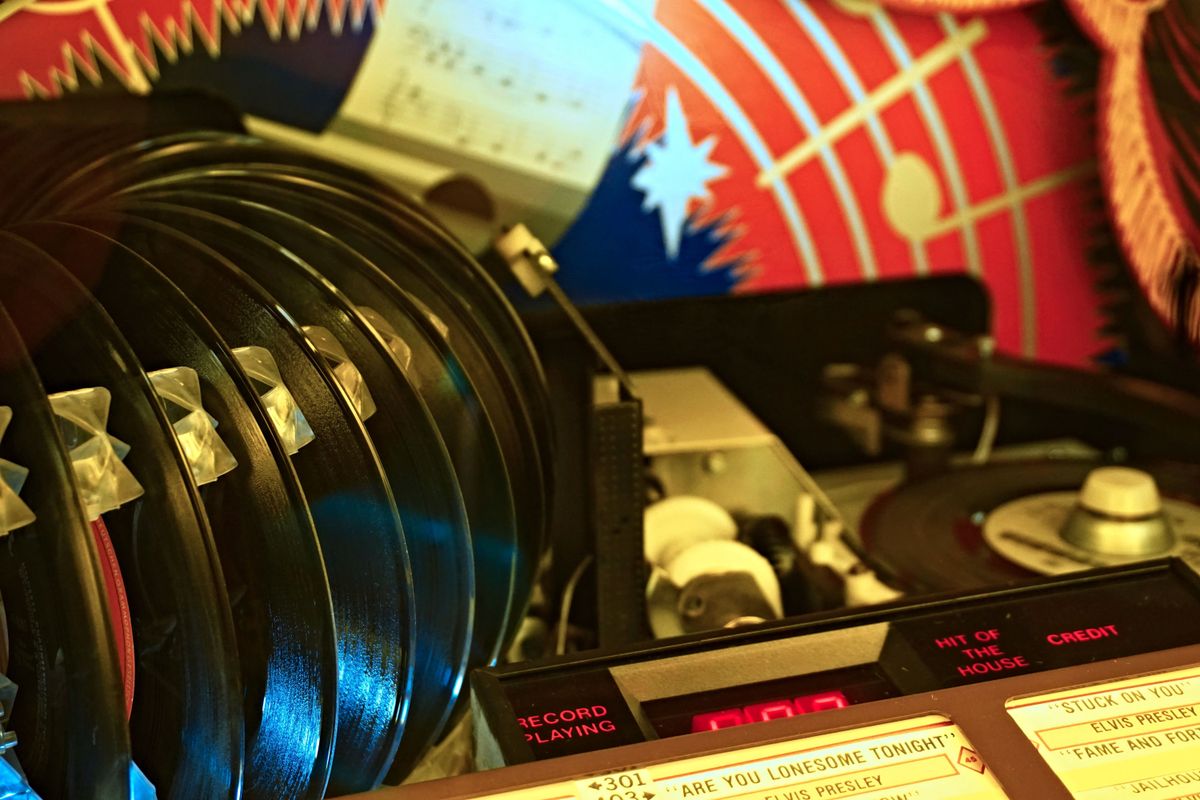
Walk into a bustling small-town diner, bowling alley lounge, or malt shop in 1962, and your eyes were inevitably drawn to a mesmerizing spectacle glowing in the corner: the towering, chrome-and-hardwood jukebox. Rising like an illuminated cathedral of sound, glass tubes filled with bubbling colored liquids danced with light, while rows of white title strips displayed the hottest top-40 hits of the week.
Long before digital algorithms generated invisible, solitary streaming feeds into wireless earbuds, music was a shared, communal experience. You didn’t just listen to a song; you gathered around a machine with your friends, pooled your nickels, and watched with breathless wonder as mechanical gears physically pulled your favorite record from a carousel.
From the iconic Wurlitzer “Bubbler” to the dusty crates of local independent record shops, vinyl records and jukeboxes formed the living soundtrack of small-town American youth. Let us drop a coin into the slot and celebrate the golden age of analog music.
The Mechanical Marvel of the Wurlitzer “Bubbler”
Manufactured in North Tonawanda, New York, the **Wurlitzer 1015**—introduced in 1946 and known affectionately as **”The Bubbler”**—is arguably the most recognizable piece of Americana ever built.
Designed by Paul Fuller, the machine featured arched translucent plastic pilasters filled with shimmering liquid bubble tubes heated by internal light bulbs. As the liquid warmed, endless streams of tiny, effervescent bubbles rose through rotating rainbow color cylinders, creating a hypnotic light show that bathed the entire room in a warm, welcoming glow.
Rival manufacturers like **Seeburg** and **Rock-Ola** added their own innovations, crafting sleek, chrome-plated futuristic consoles that looked like rocket cockpits from the 1950s space race.
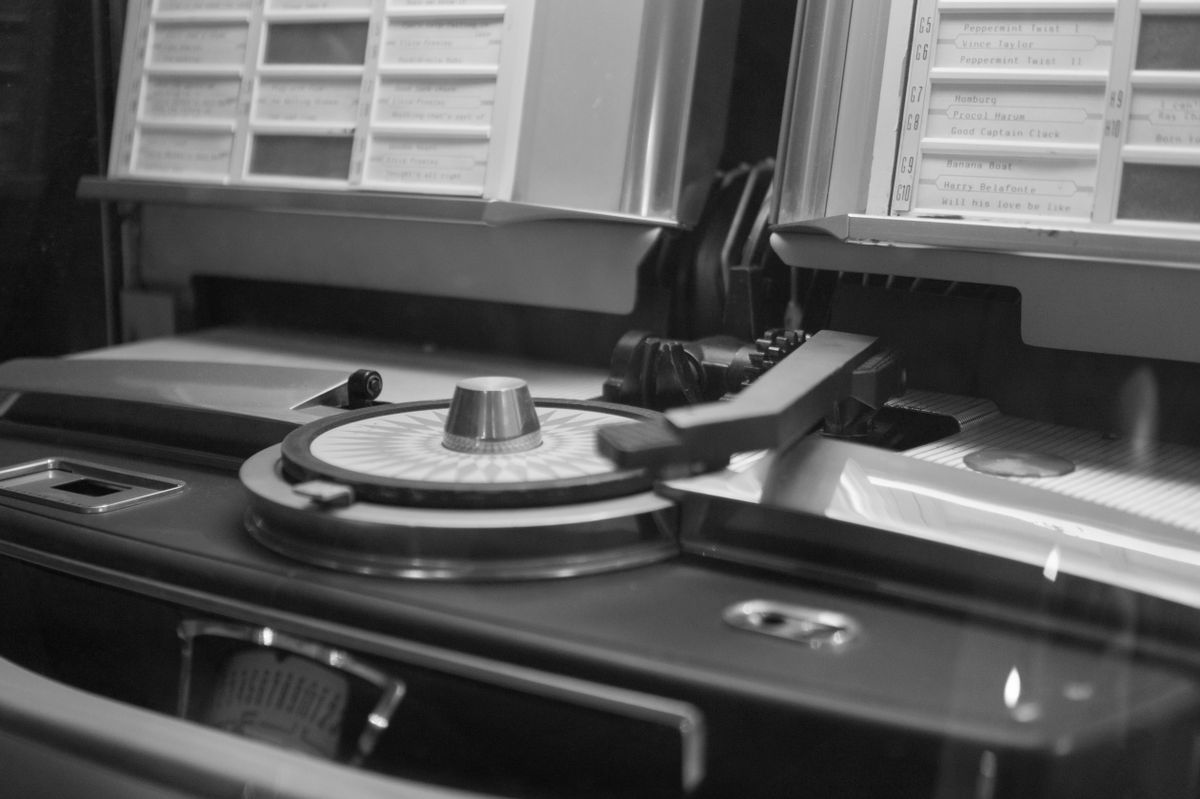
The 45 RPM Single and the Magic of the Robotic Arm
The beating heart of the mid-century jukebox was the **7-inch, 45 RPM vinyl single**. Introduced by RCA Victor in 1949, these lightweight discs featured an oversized 1.5-inch center hole, allowing rapid mechanical sorting.
The sequence was poetry in motion: you dropped a shiny nickel or dime into the slot, pushed a letter and number button combination like **”B-4″**, and peered through the thick curved glass. A mechanical circular carousel spun into position, a robotic metal gripper arm reached in, clamped the edge of the record, placed it horizontally onto the spinning felt turntable, and gently lowered the magnetic cartridge needle.
A second of crackling static resonated through the heavy wood-cabinet speakers, followed by the electrifying opening guitar riff of Chuck Berry, Elvis Presley, Patsy Cline, or The Ronettes, instantly turning the diner floor into an impromptu dance party.
Tabletop Wallboxes: Music at Your Booth
To bring the music directly to diners without making patrons leave their booths, Seeburg introduced the miniature **tabletop wallbox**. Mounted against the wall at eye level in every booth was a compact chrome-and-glass console with mini flip-pages listing hundreds of songs.
Couples dropped dimes directly into the wallbox, flipped through the song cards, and pressed red selector buttons. The electronic impulses traveled through underground wires directly to the main jukebox in the corner, queuing songs automatically while you drank your milkshake.
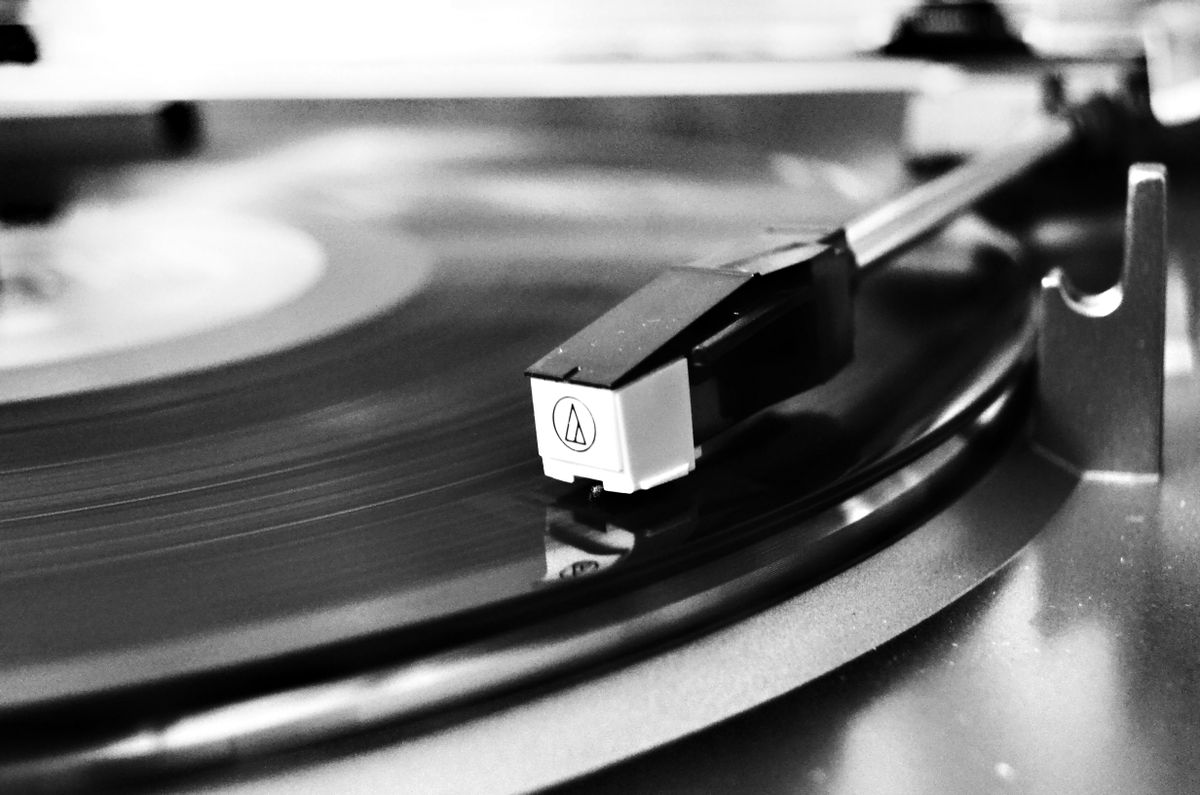
Flipping Through Crates at the Hometown Record Store
On Saturday afternoons, teenagers flocked to the local **record store** to buy the 45 RPM singles they had danced to the night before. You flipped through long rows of wooden crates with your fingers, admiring colorful gatefold album covers, reading the detailed liner notes on the back, and searching for the latest releases from Motown, Stax, or Sun Records.
For forty-five-cent singles played at home, every teenager owned a stash of yellow plastic **snap-in spindle adapters**—affectionately called “spiders”—that snapped into the center hole so the record could spin on a standard home turntable spindle.
The Warm Acoustic Soul of Analog Sound
Beyond the mechanical beauty of jukeboxes and turntables was the unique quality of analog sound. Music pressed onto vinyl possessed an organic warmth, deep bass resonance, and dynamic acoustic range that modern digital compression files simply cannot replicate.
The gentle, rhythmic crackle of the needle settling into the outer groove was not an imperfection; it was a tactile promise that human musicians had poured their souls into cutting that physical disc.
Listening Booths and the Magic of the B-Side Single
Inside classic independent record shops stood individual **listening booths** equipped with heavy padded headphones and a private turntable. Customers could bring any record up to the clerk, who gently slid the vinyl out of its sleeve so you could sample two tracks before deciding whether to spend your hard-earned allowance.
Part of the excitement of buying 45 RPM singles was flipping the record over to explore the **B-side track**. While radio stations played the hit A-side relentlessly, B-sides often hid experimental acoustic songs, raw blues jams, or future cult classics that became deeply cherished personal treasures protected in crisp white paper sleeves.
The 33 1/3 Long-Playing Album and Gatefold Artwork
For home listening, the **12-inch 33 1/3 RPM Long-Playing (LP) album** was a complete artistic statement. Opening a thick cardboard gatefold sleeve revealed stunning double-page artwork, handwritten song lyrics, posters, and stickers, turning the simple act of listening to an album into an intimate, multi-sensory journey.
The Soundtrack of Our Youth
Vinyl records and classic jukeboxes were more than musical appliances; they were the democratic gathering places of American social life. They brought communities together across diner booths, sparked lifelong romances, and provided the unforgettable soundtrack to the best years of our lives.
What was the first 45 RPM vinyl single you ever purchased, and what song did you always play on the diner jukebox?
🎶 Related Musical Journey: Pull into a booth in drive-in diners and soda fountains of small-town USA and cruise down the highway with classic American cars that defined a generation.