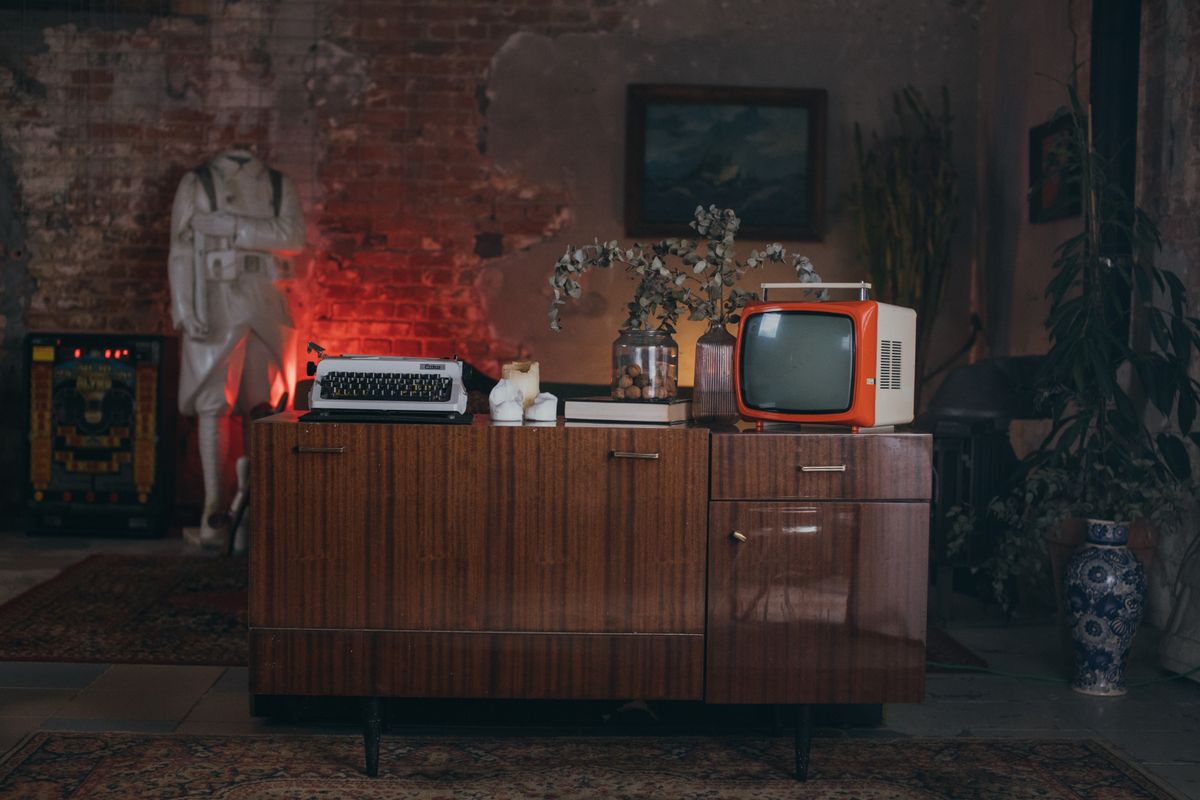
Step across the threshold of a suburban American home in 1968, and you encountered an unspoken, sacred household rule: children did not simply walk into the formal front living room. With its pristine vacuumed carpet lines, delicate brocade sofa protected by squeaky clear plastic slipcovers, and cut-glass candy dish filled with ribbon candies permanently stuck together, this room was reserved strictly for Sunday pastoral visits and holiday adult company.
For more than six decades, the American living room has served as a cultural mirror reflecting our changing family dynamics, technological revolutions, and domestic priorities. It has evolved from a formal, pristine display gallery into a casual, open-concept entertainment hub where walls have been torn down and screens dominate every view.
Let us pull up an armchair and explore the fascinating decade-by-decade evolution of America’s central gathering space from the 1960s to today.
The 1960s: The Formal Parlor and the Basement “Rec Room”
In mid-century ranch and split-level homes, domestic life was strictly divided into two distinct zones: the formal living room upstairs and the casual family “rec room” (recreation room) in the basement.
The upstairs living room featured low-slung Mid-Century Modern credenzas, kidney-shaped teak coffee tables, and matching ceramic lamps with tiered fiberglass shades. On the side table sat a set of embossed leather coasters, a heavy amber glass ashtray, and the latest issue of *Life* or *The Saturday Evening Post*.
Meanwhile, the basement rec room had wood paneling, linoleum tile floors, a ping-pong table, and a noisy television set where children were banished to play board games and watch Saturday cartoons without disturbing the adults upstairs.
The 1970s: The Earthy, Sunken Conversation Zone
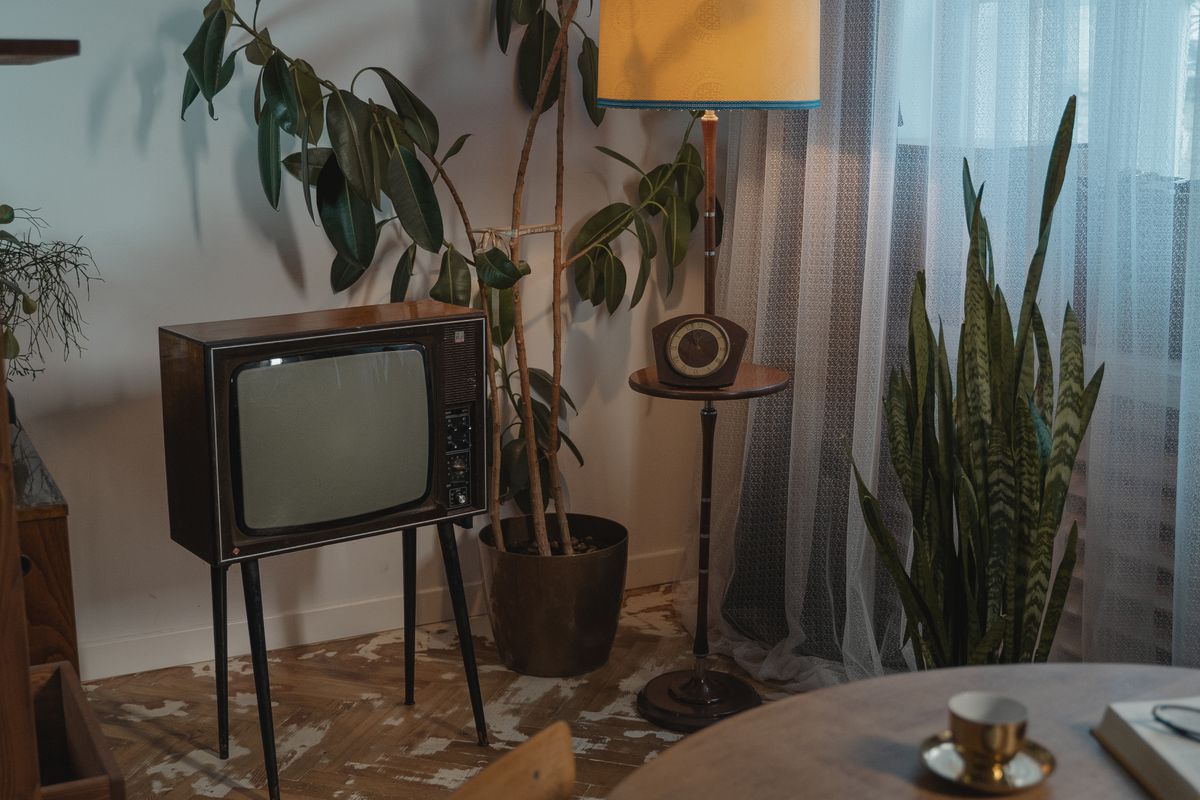
By the 1970s, formal stiffness gave way to relaxed, communal living. Living rooms were transformed into organic sanctuaries dominated by nature-inspired palettes: harvest gold, avocado green, burnt orange, and rich walnut.
Architects designed sunken conversation pits where friends gathered on plush low-profile sofas around open brick hearths. Macramé plant hangers suspended spider plants from exposed timber beams, while thick shag carpets encouraged teenagers to sprawl directly on the floor to listen to Fleetwood Mac or Eagles albums on the giant stereo console.
Dominating the room was the **console television**—a 300-pound piece of fine solid oak or Mediterranean pecan cabinetry from Zenith, Magnavox, or RCA that functioned as both a luxury television and a stately piece of furniture.
The 1980s: Floral Chintz, Sectional Sofas, and Brass Accents
The 1980s brought a wave of pastel elegance and suburban comfort. Out went heavy earth tones; in came dusty rose, seafoam green, and Laura Ashley floral chintz patterns.
Massive velvet **sectional sofas** curved around glass-topped brass coffee tables, accompanied by brass floor lamps and vertical window blinds that clicked softly in the breeze. Bookshelves proudly displayed complete 24-volume sets of *The World Book Encyclopedia* bound in black and gold leatherette, purchased from door-to-door salesmen.
Above the VCR sat rows of VHS cassettes, while the remote control—attached by a long cord or thick infrared brick—was guarded jealously by dad in his favorite reclining La-Z-Boy armchair.
The 1990s: The Giant Entertainment Center Armoire
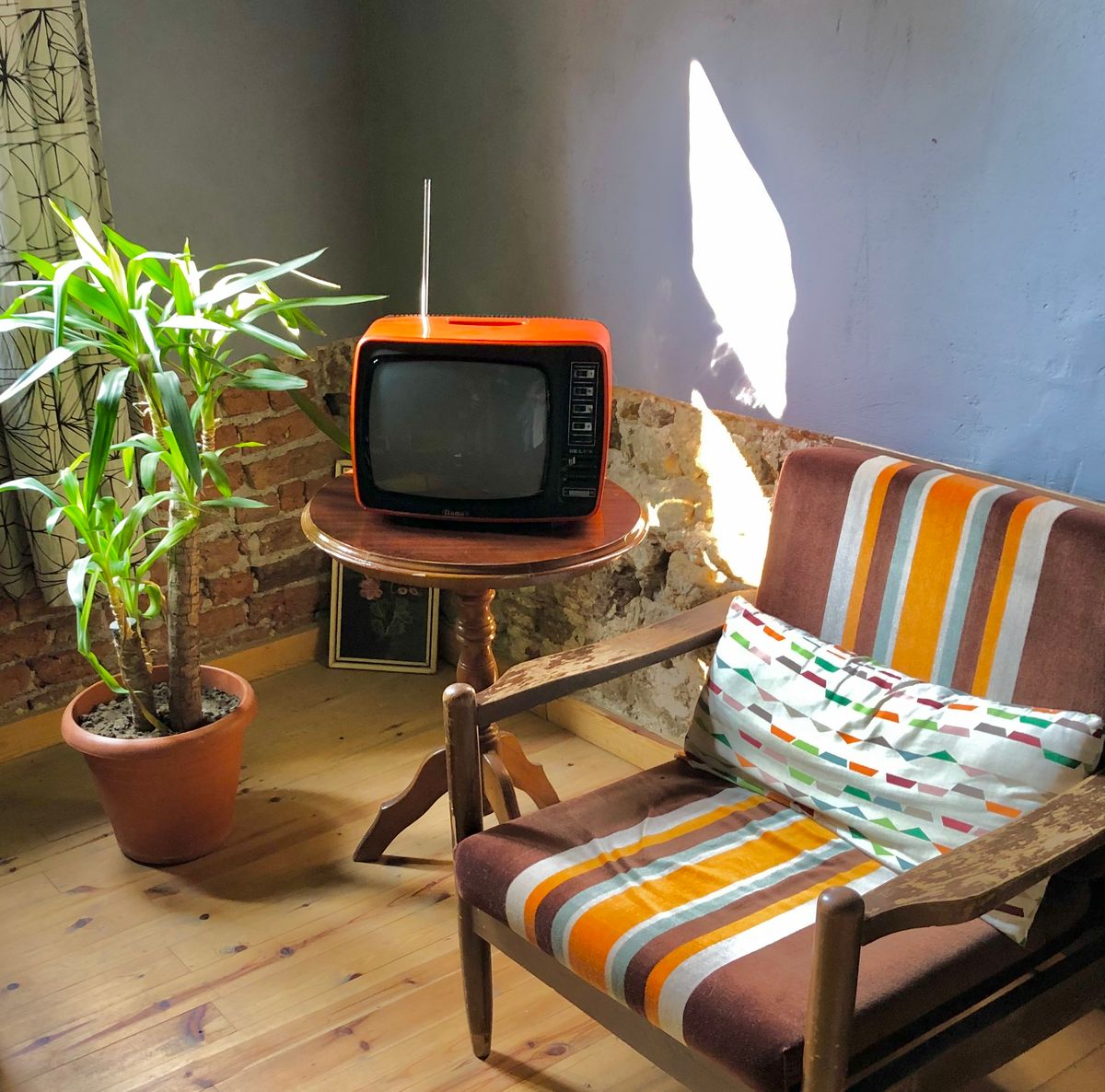
In the 1990s, television screens grew to 32 and 36 inches, but they were massive, deep glass cubes that weighed up to 200 pounds. To conceal this technological beast, every American living room installed a monumental **entertainment armoire**.
Constructed of honey oak with pocket doors, these giant wooden towers had dedicated shelves for the CRT television, VCR, stereo receiver, cassette deck, CD carousel changer, and dozens of plastic CD jewel cases.
Overstuffed hunter green or burgundy leather sofas provided cloud-like comfort as families gathered to watch *Seinfeld* and *Friends* every Thursday evening.
The 2000s to Today: Open Concepts and Wall-Mounted Screens
Over the past twenty years, residential architecture has completely eliminated interior walls. The living room, dining room, and kitchen have merged into a singular “Great Room” dominated by granite kitchen islands, gray hardwood floors, and recessed LED ceiling spotlights.
Bulky wooden armoires have vanished, replaced by paper-thin 75-inch smart televisions mounted directly above electric fireplaces, with all cables concealed behind drywall.
The Hi-Fi Stereo Console and the Living Room Turntable
Before personal headphones and digital playlists isolated our music listening, the living room was a shared auditory sanctuary centered around the **solid-wood Hi-Fi stereo console**. Stretching five or six feet across the wall, this polished mahogany or walnut credenza featured heavy lift-up top lids revealing a precision Garrard or Dual turntable and glowing radio tuner dials.
On Saturday evenings, parents slid vinyl LPs out of glossy cardboard jackets, gently blew dust off the grooves, and set the needle down to fill the entire home with the warm, rich, acoustic sound of Frank Sinatra, Simon & Garfunkel, or Herb Alpert & the Tijuana Brass through built-in woven fabric speaker grilles.
Lace Doilies, Glass Ashtrays, and the TV Guide
Resting on the arm of every upholstered chair was a hand-crocheted lace **antimacassar doily** designed to protect the fabric, while on the wooden coffee table sat the indispensable household navigator: the weekly **TV Guide magazine**. Marked with red pen circles around must-watch holiday specials like *A Charlie Brown Christmas*, it dictated the entire family’s evening schedule.
What We Gained, and What We Left Behind
Today’s open-concept living spaces are bright, spacious, and seamlessly connected. Yet many Americans still harbor a quiet nostalgia for the cozy, distinct rooms of the past—spaces with dedicated doors, warm wood paneling, tactile stereo knobs, and that special feeling of gathering closely together around a warm console television set.
Which era of the American living room was your favorite to grow up in, and do you still remember your family’s very first television console?
🛋️ Related Home Tour: Revisit retro design trends in the 1970s home decor trends Americans loved and see how the American kitchen has changed since the 1960s.